Competency
Drone certificates
Two documents, constantly confused: the ID number that registers you, and the test result that qualifies you. Here is which you need for what.
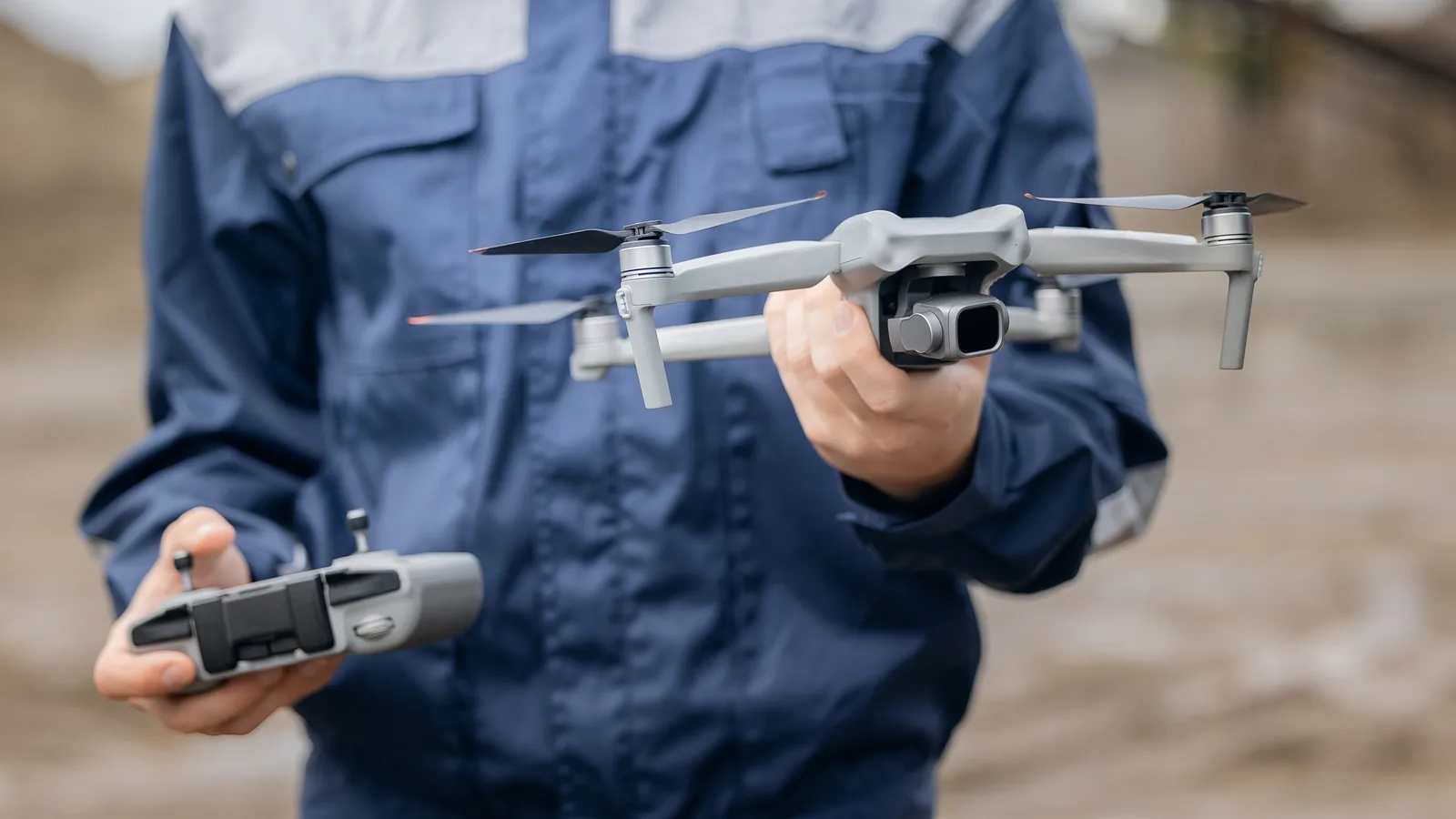
Registration and competency are different documents
The paperwork of European drone flying is two parallel tracks:
- Operator registration — who you are. One number per operator, on every drone, in Remote ID. Handled on the registration page.
- Pilot competency — what you may fly, and where, relative to people. That is this page.
Sites that present "registration" as one certificate with training attached are describing neither system correctly. You can be registered with no test (flying a C0 camera drone), and you can hold every certificate while unregistered (and be flying illegally the moment the drone has a camera).
The A1/A3 online test
This is the baseline competency for the Open category: online training and a multiple-choice test, run by your national aviation authority — not by commercial schools. In most countries it is free; a few charge a small administrative fee. It covers air law basics, safety, privacy and the subcategory limits.
With A1/A3 you may fly C0 and C1 drones in A1, and anything under 25 kg in A3 — well away from people and built-up areas.
The A2 certificate of competency
The A2 is the step up, and the one with a real exam: additional self-study, then a proctored theory test covering meteorology, flight performance and technical mitigation. In some countries you sit it at the authority; in others, at recognised entities — which is where training providers come in.
What it buys you: flying a C2 drone (under 4 kg) as close as 30 m to uninvolved people, or 5 m in low-speed mode. If you photograph anything in towns with a mid-size drone, this is the certificate that makes it legal.
Which drone needs which certificate
| Subcategory | Class marks | What it means in practice |
|---|---|---|
| A1 | C0 (under 250 g) and C1 (under 900 g) | May fly over people, but never over assemblies of people. C1 requires a short online test. |
| A2 | C2 (under 4 kg) | Keep at least 30 m from uninvolved people, or 5 m in low-speed mode. Requires the A2 certificate of competency. |
| A3 | C2, C3 and C4 (under 25 kg) | Fly at least 150 m from residential, commercial, industrial or recreational areas. |
Class marks C0–C6 have been mandatory since 1 January 2024. The transition period is over: a drone without a class mark may only be flown in A1 (under 250 g) or A3 (under 25 kg).
A1/A3 or A2 — what do you actually need?
Find the Open subcategory, separate operator registration from pilot competency, and open the correct national route for your destination. The class mark physically attached to the aircraft controls the answer.
Two separate documentsOperator registration gives you the number placed on the drone. An A1/A3 or A2 certificate proves pilot competency. Needing one does not automatically give you the other.
Class marks C0–C6 have been mandatory since 1 January 2024. The transition period is over — a drone without a class mark is limited to A1 (under 250 g) or A3 (under 25 kg), whatever it was sold as.
Beyond Open: the Specific category
Everything above — heavier drones near people, beyond visual line of sight, above 120 m — moves into the Specific category: an operational authorisation from the authority, a declared Standard Scenario, and in most cases substantially more training. If your plans head that way, the national authority's Specific-category pages are the starting point; every country page links to them.
Common questions
Is the A1/A3 certificate the same as registration?
No, and mixing them up is the most common confusion in European drone paperwork. Registration identifies you as an operator — it is an ID number. The A1/A3 certificate proves competency — it is a test result. Most pilots need both, they are obtained separately, and one does not imply the other.
Is a certificate from one country valid in another?
Yes. Competency certificates issued under the EASA framework are recognised across the EU/EEA, the same way registration is. Take the test once, in your own language, and fly on it anywhere in the zone.
Do I need the A2 certificate?
Only if you fly a C2 drone close to people. The A2 is the certificate with a real exam — proctored theory, not just online clicks. If you keep a C2 drone 150 m from built-up areas you are in A3 and the online test is enough.
Does a sub-250 g drone need any certificate?
For a C0 drone, no test is required — just reading the manual. You still need operator registration if it has a camera. This is the genuine paperwork advantage of the sub-250 g class.