The framework
Drone rules in Europe
One framework, three categories, and a handful of things that are genuinely national. Here is what applies wherever you fly in the EU and EEA.
The three categories
European drone regulation sorts operations by risk, not by whether you are flying for fun or for money. That last point catches people out: there is no separate "recreational" rulebook. A hobby flight and a paid job with the same drone in the same place fall under the same category.
| Category | What it covers |
|---|---|
| Open | Open — no authorisation needed, but the operation must stay inside the A1/A2/A3 limits. |
| Specific | Specific — needs an operational authorisation, a declaration, or a Standard Scenario (STS). |
| Certified | Certified — treated like manned aviation. Applies to the largest and highest-risk operations. |
Almost everything a private pilot does sits in the Open category. If you find yourself needing an authorisation, you have left it.
Inside the Open category
The Open category splits into three subcategories. Which one you are in depends on the drone's class mark and weight, and on how close you will be to people.
| Subcategory | Class marks | What it means in practice |
|---|---|---|
| A1 | C0 (under 250 g) and C1 (under 900 g) | May fly over people, but never over assemblies of people. C1 requires a short online test. |
| A2 | C2 (under 4 kg) | Keep at least 30 m from uninvolved people, or 5 m in low-speed mode. Requires the A2 certificate of competency. |
| A3 | C2, C3 and C4 (under 25 kg) | Fly at least 150 m from residential, commercial, industrial or recreational areas. |
Class marks, and why 2024 matters
Class marks C0–C6 have been mandatory since 1 January 2024. The transition period is over: a drone without a class mark may only be flown in A1 (under 250 g) or A3 (under 25 kg).
Before 2024 there was a transition period where older drones without a class mark could be flown under interim rules. That period is over. If you are reading guidance that describes "legacy drones" as a current arrangement with its own weight bands, it is out of date.
In practice this means one of two things for an unmarked drone: if it is under 250 g you can fly it in A1, and if it is heavier you are restricted to A3 — at least 150 m from residential, commercial, industrial and recreational areas.
The core limits
- Maximum height
- 120 m above ground level.
- Line of sight
- Visual line of sight at all times. Exceptions need an observer or an approved FPV setup.
- Night flying
- Night flying is allowed in the Open category. A class-marked drone must show a flashing green light.
- Registration
- One registration covers the whole EU/EEA. Register in the country where you live. Operators from outside the EU/EEA register in the first country they intend to fly in.
- Insurance
- EU law only requires third-party liability insurance above 20 kg (Regulation (EC) 785/2004 exempts lighter aircraft). Below that it is national law that decides — and several countries do require it.
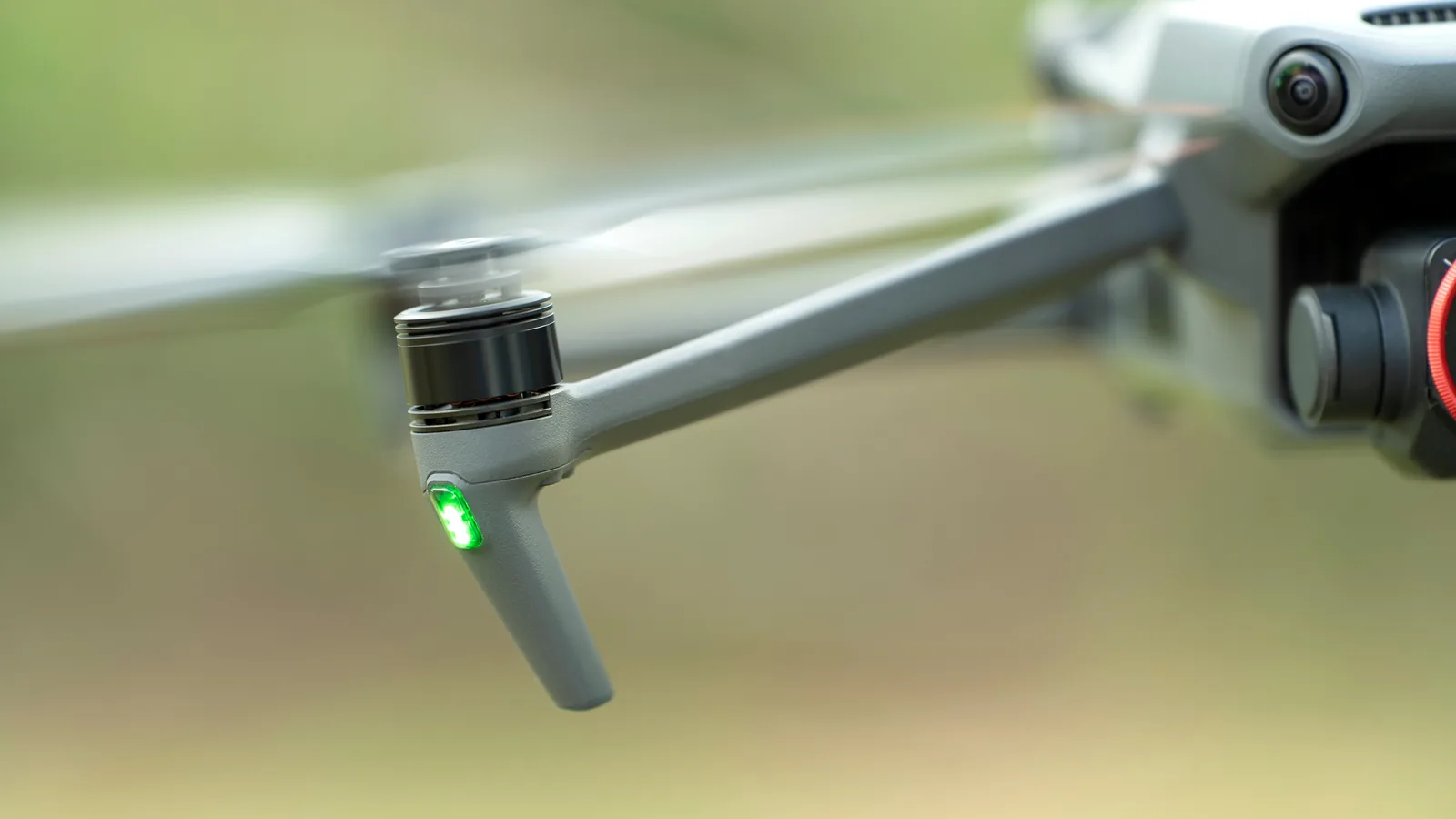
For Open-category night operations, the aircraft must display a green flashing light so a person on the ground can distinguish it from a manned aircraft. A normal steady status LED is not automatically the same thing; check the aircraft manual and add a compliant beacon if required.
What is national, not European
Four things vary by country, and they are the four things worth checking before a trip:
- Geographical zones. Every country draws its own. There is no shared EU distance from airports, whatever you may have read.
- Registration cost. Free in eight of the 38 countries here, charged in the rest.
- Insurance. EU law requires it above 20 kg. 24 countries here have a confirmed national rule below that threshold or for particular operations.
- Penalties. Set and enforced nationally, and most countries do not publish a fixed schedule.
There is no single EU-wide distance from airports. Each country publishes its own UAS geographical zones, so check the national map or app before every flight.
A1/A3 or A2 — what do you actually need?
Find the Open subcategory, separate operator registration from pilot competency, and open the correct national route for your destination. The class mark physically attached to the aircraft controls the answer.
Two separate documentsOperator registration gives you the number placed on the drone. An A1/A3 or A2 certificate proves pilot competency. Needing one does not automatically give you the other.
Class marks C0–C6 have been mandatory since 1 January 2024. The transition period is over — a drone without a class mark is limited to A1 (under 250 g) or A3 (under 25 kg), whatever it was sold as.
Common questions
Do the same drone rules apply everywhere in Europe?
The framework is shared: the same three categories, the same 120 m height limit, the same class marks. What differs by country is where you may fly (geographical zones), what registration costs, and whether insurance is required. That is why every country has its own page here.
Does the Open category need any authorisation?
No. That is what defines it. If your flight fits inside A1, A2 or A3, you do not apply for anything — you register as an operator, pass the relevant test, and fly. Anything outside those limits moves you into the Specific category, which does need an authorisation.
What changed on 1 January 2024?
The transition period for legacy drones ended. Class marks C0–C6 became mandatory, and a drone without one can now only be flown in A1 (under 250 g) or A3 (under 25 kg). A lot of guidance online still describes the transition as if it were ongoing.
Is a drone under 250 g exempt from everything?
No. It is exempt from a lot, but if it has a camera or another sensor that can capture personal data, you still have to register as an operator. Geographical zones apply to it exactly as they do to bigger drones.
Sources
The baseline on this page comes from the EU regulations and EASA's own published guidance, not from secondary sites.
- EASA — Open category
- Regulation (EU) 2019/947
- Regulation (EU) 2019/945
- Regulation (EC) 785/2004 — insurance