🇮🇸 Country guide · updated 2026-09
Drone laws in Iceland
Iceland changed the rule that matters most to drone photographers on 17 May 2026, and almost nothing written before then reflects it.
At a glance
- Registration
- ISK 5,863 for private individuals; ISK 7,462 for legal entities
- Registration portal
- flydrone.is
- Maximum height
- 120 m above ground level in the Open category.
- Insurance
- Not required by national law
Iceland changed the rule that matters most to drone photographers on 17 May 2026, and almost nothing written before then reflects it. The Nature Conservation Agency now grants permits for drone flight in protected areas only for commercial purposes — which means Gullfoss, Geysir, Skógafoss, Goðafoss, Dyrhólaey and Látrabjarg are, in practice, closed to recreational flying all year, with Snæfellsjökull, Dynjandi, Hornstrandir and Landmannalaugar closed seasonally. The change is under appeal, so it may not be the last word. Two other things are worth knowing before you pack: the old Icelandic 150-metre ceiling was repealed in November 2024 and the limit is the European 120, and an EU or EEA registration is valid here, so you should not register again.
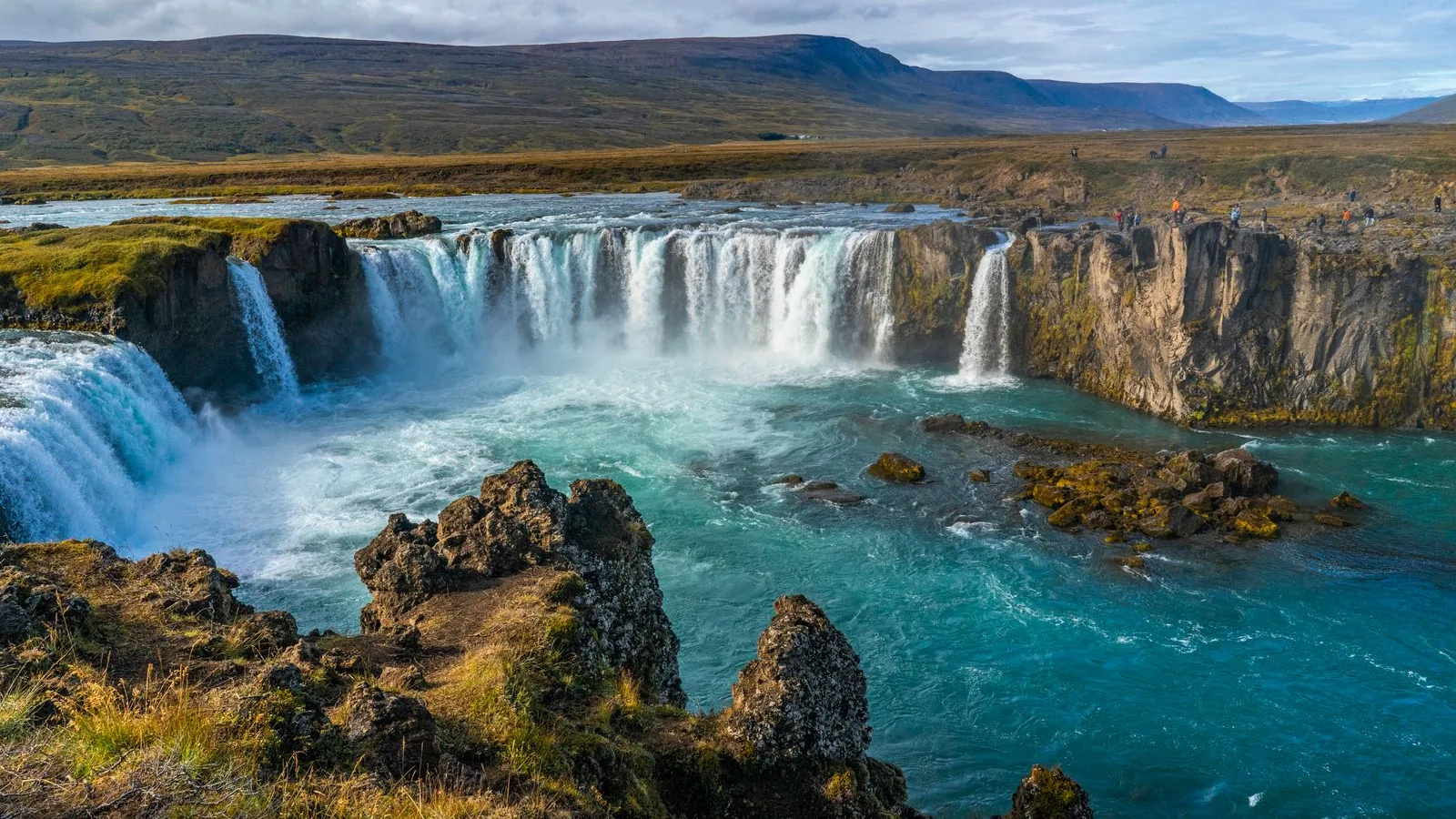
Country-specific decision path
Before you choose a launch point in Iceland
- Confirm your operator paperwork Registration required — ISK 5,863 for private individuals; ISK 7,462 for legal entities. In the EEA. An EU/EEA operator registration is valid here — you do not register again. Open flydrone.is
- Check the exact route on the official map Iceland drone map is the national starting point; read every condition covering the complete route, not only the launch pin. Open Iceland drone map
- Apply the local layer Iceland is in the EEA and applies the European rules, so an EU or EEA operator registration is valid here and must not be repeated — we previously said the opposite on this page and were wrong. Review the Iceland zone and nature checks
Registration in Iceland
Iceland is an EEA member and a full participant in the European system: one EU or EEA registration covers Iceland, and competency certificates carry across. The national instrument is regulation 1360/2024, issued in November 2024, which transposes the EU regulations and — importantly for anyone reading older guidance — repealed the 2017 Icelandic drone regulation outright. The nature-conservation side was reorganised at the same time: Náttúruverndarstofnun replaced Umhverfisstofnun as the protected-areas authority under a 2024 act, and Vatnajökull National Park now falls under it. Links and references to Umhverfisstofnun as the drone permit authority are stale.
The fee and the five-year validity are both correct. We have dropped the euro equivalent we used to print — the figure is derived from the authority's hourly service charge and the króna floats, so a fixed euro number goes stale without anyone noticing. Note who this fee is for: the Icelandic portal is for Icelandic operators and visitors from outside Europe. If you hold an EU or EEA registration you must not register here again. Minimum age 16, with under-16s allowed to fly a sub-250 g C0 drone in A1 or to operate under the supervision of a registered pilot.
What it costs: ISK 5,863 for private individuals; ISK 7,462 for legal entities — Valid 5 years.
In the EEA. An EU/EEA operator registration is valid here — you do not register again.
How to register
- Register at island.is (Icelandic government portal)
- Create an account (Icelandic ID or e-ID for visitors)
- Access the drone registration section
- Complete operator registration with personal details
- Register each drone with specifications
- Receive operator ID and registration confirmation
- Review environmental guidelines and restrictions
You register as an operator — not the drone. Registration is required from 250 g, or below 250 g if the drone can transfer more than 80 J of energy, or if it carries a sensor able to capture personal data. CE-marked toys are exempt. Put your operator number on every drone you fly and set it in Remote ID.
Flight rules
- Maximum height
- 120 m above ground level in the Open category.
- Line of sight
- Visual line of sight required. Iceland's vast open landscapes can make distance judgment challenging.
- Weight classes
- Categories similar to EU weight classes. Extreme cold significantly affects battery performance.
- Night flying
- Night flying is allowed in the Open category. A drone with a class mark must show a flashing green light so it stays visible. You still have to keep it in sight, which is harder after dark, and national geographical zones apply exactly as they do in daylight.
- Weather
- Icelandic weather is extremely unpredictable. Wind speeds can change dramatically. Always check vedur.is (Icelandic Met Office) before flying.
Class marks C0–C6 have been mandatory since 1 January 2024. The transition period is over: a drone without a class mark may only be flown in A1 (under 250 g) or A3 (under 25 kg).
Where you may not fly
There is no single EU-wide distance from airports. Each country publishes its own UAS geographical zones, so check the national map or app before every flight.
Airports and controlled airspace
Flying at an airport or inside an airport area needs the operator's permission — not the aviation authority's. For Keflavík that means ISAVIA's own online application; for Reykjavík city airport and the other scheduled airports it is Innanlandsflugvellir ehf. Flight within 50 m of an aircraft's flight path also needs the operator's authorisation. The zones themselves are published on the authority's drone map.
Towns and cities
Reykjavík city area has restrictions. Historic sites and urban areas require caution.
Protected nature
This changed fundamentally on 17 May 2026, and it is the most important thing on this page. The Nature Conservation Agency altered its permit practice so that permits for drone flight in protected areas are now issued only for commercial purposes — research, monitoring, supervision, construction, film and professional photography. It is not worded as a recreational ban, but that is its practical effect: in the areas on its lists, a recreational permit is no longer available. Year-round, that covers Gullfoss, Geysir, Skógafoss, Goðafoss, Dyrhólaey, Látrabjarg, Akurey, the Mývatn and Laxá protection area, Stórurð, Skútustaðagígar and several sites in Þjórsárdalur. From 1 May to 15 September it also covers Snæfellsjökull National Park, Dynjandi, Dimmuborgir, Hornstrandir, Grótta, Lundey, Flatey, Ingólfshöfði and Þjórsárver. From 15 June to 15 September it covers Fjallabak, the reserve containing Landmannalaugar. The change is under appeal to the environment ministry as of June 2026, so it may move — check before you travel.
Government and military sites
Government buildings in Reykjavík and official facilities are restricted.
Other restrictions in Iceland
- Vatnajökull National Park runs its own rules and is more permissive: recreational flight needs no permit, but Skaftafell, Jökulsárgljúfur and Askja are closed outright, several sites need a ranger's verbal permission, and Jökulsárlón and Dettifoss have detailed seasonal time windows
- Jökulsárlón is closed entirely from 15 April to 15 July for nesting birds, and outside that window is limited to early morning and evening hours that shift through the year
- Dettifoss is west bank only, with its own time windows, and prohibited north of the westernmost viewpoint
- Þingvellir needs no permit but asks to be notified, and its core zone — Almannagjá, Lögberg, Silfra, Hak — is flyable only before 09:00 or after 18:00
- 150 m from sensitive public infrastructure: power plants, the parliament, presidential residences, ministries, embassies, police stations, prisons and hospitals
- Volcanic restrictions are imposed at short notice during eruptions rather than standing permanently — check the civil protection agency and NOTAMs before flying on Reykjanes
Insurance
There is no national insurance requirement for light drones in Iceland. EU law only mandates third-party liability cover above 20 kg. Insurance is still strongly recommended, and it is required for most commercial work.
Penalties
Iceland publishes no schedule of drone fine amounts, and the drone regulation itself contains no penalties article at all — the basis sits in the Aviation Act, which provides for fines or imprisonment, and in the Nature Conservation Act for protected-area breaches. We could not read the penalty chapters of either act from an official source, so we print no figure and no maximum. We also found no documented prosecution or enforcement case against a visitor, only drone blogs and tour operators, which is not enough to report as fact.
Whatever the amount, the pattern across Europe is the same: paperwork failures are handled administratively, while flying near aircraft, over crowds, or inside a protected zone is what turns a case into a prosecution.
Visiting Iceland with a drone
Iceland is in the EEA and applies the European rules, so an EU or EEA operator registration is valid here and must not be repeated — we previously said the opposite on this page and were wrong. The Icelandic registration portal is for Icelandic operators and for visitors from outside Europe. What genuinely changed for visitors is on the ground rather than in the paperwork: since 17 May 2026 the Nature Conservation Agency grants drone permits in protected areas only for commercial purposes, which closes most of the country's signature waterfalls to recreational flying. Vatnajökull National Park runs a separate and more permissive regime, and Þingvellir another again. Check which of the three applies to the specific place you have in mind, because they do not agree with each other.
Commercial work
Commercial status is now the deciding factor in Iceland's protected areas rather than a formality — since May 2026 it is the only basis on which a permit is granted in the listed areas, covering research, monitoring, supervision, construction, filmmaking and professional photography. Vatnajökull National Park also distinguishes the two: recreational use needs no permit there, commercial use does. The authority's other charges are published: the A2 exam ISK 7,462, an STS theory certificate ISK 10,661, an operational authorisation billed at ISK 18,358 an hour, and a light UAS operator certificate ISK 453,071. The A1/A3 exam is free.
Location planning
These are well-known photographic subjects to research, not recommended launch points or proof that a flight is allowed. Check the exact route against official airspace, nature, land-manager and people restrictions.
- Highlands interior (weather permitting, away from restricted areas)
- Eastfjords coastal areas
- Snæfellsnes Peninsula (check park restrictions)
- Westfjords remote areas
- South coast waterfalls (check individual restrictions)
- Northern Iceland volcanic areas (check activity status)
Apps and official maps
- flydrone.is — the Transport Authority's registration and examination site. The authority announced it directly when it opened
- island.is/en/drone-map — the authority's drone map, showing where special flight restrictions apply. It is hosted on a commercial Icelandic mapping platform, with the content from the authority
- island.is — the Transport Authority's information hub. It is not the registration portal; flydrone.is is
Practical tips
- Do not register in Iceland if you already hold an EU or EEA registration. The authority says operators should be registered in only one European country, and the Icelandic portal is for Icelanders and non-European visitors
- The waterfalls people come for are largely closed to recreational flying since 17 May 2026 — Gullfoss, Geysir, Skógafoss, Goðafoss and Dyrhólaey are commercial-permit only, all year
- Landmannalaugar and Snæfellsjökull are seasonal versions of the same rule
- Vatnajökull National Park is the exception and allows recreational flight without a permit — but Skaftafell, Ásbyrgi and Askja are closed, and Jökulsárlón and Dettifoss run on time windows
- The old Icelandic 150 m ceiling is gone. It was repealed with the 2017 regulation in November 2024, and the limit is the EU's 120 m. The 150 m that survives is a distance from sensitive infrastructure, which is a different rule entirely
- Volcanic no-fly areas appear at short notice and are not permanent. Check the civil protection agency rather than assuming either way
- Seljalandsfoss, Reynisfjara and Kirkjufell are not named in any of the three permit regimes — but that is not the same as being allowed, and Reynisfjara sits next to a closed site
Questions about flying in Iceland
Do I need to register to fly a drone in Iceland?
Registration required — ISK 5,863 for private individuals; ISK 7,462 for legal entities. In the EEA. An EU/EEA operator registration is valid here — you do not register again.
How high can I fly in Iceland?
120 m above ground level in the Open category.
Do I need drone insurance in Iceland?
There is no national insurance requirement for light drones in Iceland. EU law only mandates third-party liability cover above 20 kg. Insurance is still strongly recommended, and it is required for most commercial work.
Can I fly a drone at night in Iceland?
Night flying is allowed in the Open category. A drone with a class mark must show a flashing green light so it stays visible. You still have to keep it in sight, which is harder after dark, and national geographical zones apply exactly as they do in daylight.
What are the penalties for breaking drone rules in Iceland?
Iceland publishes no schedule of drone fine amounts, and the drone regulation itself contains no penalties article at all — the basis sits in the Aviation Act, which provides for fines or imprisonment, and in the Nature Conservation Act for protected-area breaches. We could not read the penalty chapters of either act from an official source, so we print no figure and no maximum. We also found no documented prosecution or enforcement case against a visitor, only drone blogs and tour operators, which is not enough to report as fact.
Official sources
Primary sources used for this guide, checked September 2026. Open the live national source again before flying; geographical zones and temporary restrictions can change between reviews.
- National authority Samgöngustofa (Icelandic Transport Authority) — official drone information
- Official zones and map Iceland drone map — Icelandic Transport Authority
- European framework Regulation (EU) 2019/947 — rules and procedures for operating unmanned aircraft
- Official maps directory EASA — national aviation authorities and geographical-zone sources
Rules change, and national authorities publish the current position. Before you fly, check Samgöngustofa (Icelandic Transport Authority) — it is linked at the top of this page too.