
Introduction to EU Drone Regulations
The European Union Aviation Safety Agency (EASA) has established a comprehensive framework for drone operations that applies across all EU member states. This framework categorizes drone operations into three distinct categories: Open, Specific, and Certified. Understanding these categories is essential for anyone planning to fly a drone in Europe, whether for recreational or commercial purposes. This guide provides an in-depth explanation of each category, helping you determine which one applies to your operations and what requirements you must meet.
The Philosophy Behind the Categorization
EASA's approach to drone regulation is risk-based, meaning that the level of regulatory oversight increases with the potential risk of the operation. This philosophy allows low-risk recreational flights to proceed with minimal bureaucracy while ensuring that higher-risk operations receive appropriate scrutiny. The system aims to balance safety with innovation, allowing the drone industry to grow while protecting people and property.
Historical Context
Before the current EU regulations became applicable on 31 December 2020, national systems created substantial cross-border complexity. The harmonised framework allows an operator registration issued in the appropriate EASA Member State to be recognised across the system, but it does not automatically authorise every flight. The pilot must still meet the operational category, competency, geographical-zone, insurance, privacy and site requirements at the destination.
The Open Category: Low-Risk Operations
The Open category is designed for low-risk drone operations that don't require prior authorization from aviation authorities. This category is where most recreational and many commercial drone pilots will operate. However, "open" doesn't mean "unregulated" – there are still important rules to follow.
Subcategories Within Open
The Open category is divided into three subcategories (A1, A2, and A3), each with different requirements regarding how close you can fly to people and what pilot competencies are required.
Subcategory A1: Flying Over People This subcategory allows operations over people, but only with the lightest drones. Class C0 drones (under 250g) and privately built drones under 250g can fly over uninvolved people, though not over assemblies of people. Class C1 drones (under 900g and meeting specific safety requirements) can fly over uninvolved people but must not intentionally fly over them.
For A1 operations with C1 drones, pilots must complete an online training course and pass a theoretical knowledge examination covering air safety, airspace restrictions, drone regulations, human performance limitations, and operational procedures.
Subcategory A2: Close to People This subcategory allows operations closer to uninvolved people than A3, but with more stringent requirements. Pilots must hold a certificate of competency, which requires completing online training, passing a theoretical knowledge exam, completing a practical self-training, and passing an additional theory exam on meteorology, drone flight performance, and technical/operational mitigations.
A2 operations are limited to Class C2 drones (under 4kg with specific safety features). The pilot must maintain a horizontal distance of at least 30 meters from uninvolved people, which can be reduced to 5 meters in low-speed mode.
Subcategory A3: Far from People This is the most accessible subcategory, designed for operations far from people in areas where no uninvolved person is expected to be present within the flight range. A3 operations require a safe horizontal distance from residential, commercial, industrial, and recreational areas.
Drones up to 25kg can operate in A3, including Class C2, C3, and C4 drones, as well as privately built drones. Pilot requirements are minimal – only basic online training and a test about drone regulations and safety.
Drone Classes Explained
The EU has established drone classes (C0 through C4) that define the technical characteristics and capabilities of drones suitable for different operations:
Class C0: Drones under 250g maximum take-off weight, maximum speed under 19 m/s, with no remote-identification or geo-awareness requirement. (The 120 m altitude limit is an operational rule for all Open-category flights, not a built-in feature of C0 drones.)
Class C1: Drones under 900g maximum take-off weight (or that would transfer less than 80 Joules of kinetic energy on impact), must have geo-awareness, remote identification, and be limited to 19 m/s maximum speed.
Class C2: Drones under 4kg maximum take-off weight, must have geo-awareness, remote identification, and a selectable low-speed mode (maximum 3 m/s) for A2 operations.
Class C3: Drones under 25kg maximum take-off weight, maximum dimension under 3m, geo-awareness, and remote identification required.
Class C4: Drones under 25kg maximum take-off weight, designed for model aircraft clubs, no electronic identification or geo-awareness required.
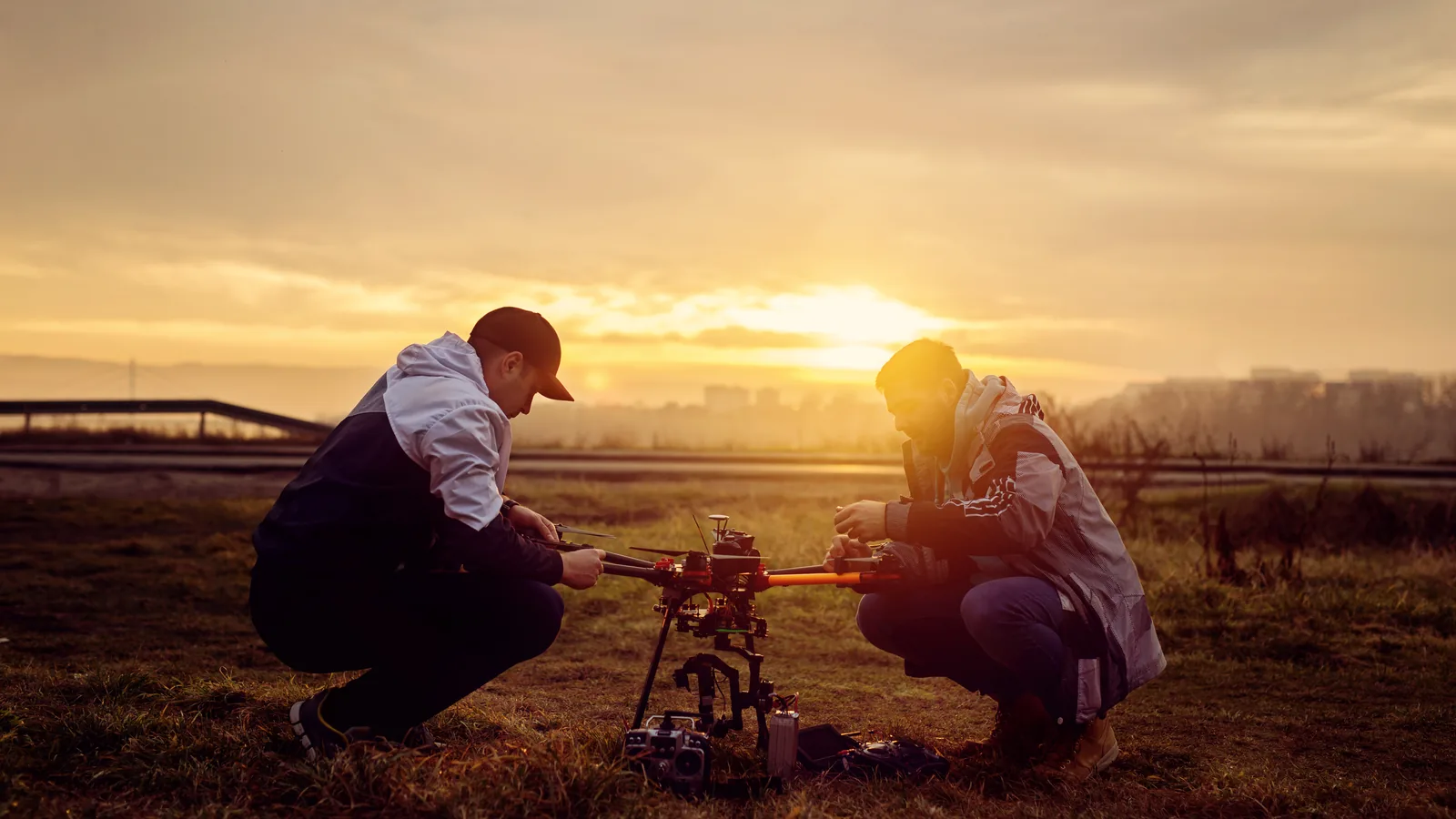
The Specific Category: Medium-Risk Operations
When operations don't meet the limitations of the Open category, they typically fall into the Specific category. This category covers operations that present a greater risk and therefore require a risk assessment and authorization from the relevant national aviation authority.
Standard Scenarios
To simplify the authorization process for common Specific category operations, EASA has developed Standard Scenarios (STS). These are pre-defined operational conditions with established mitigations that allow for streamlined authorization:
STS-01: VLOS operations over a controlled ground area in a populated environment, using a C5 aircraft and meeting every condition of the scenario.
STS-02: BVLOS operations with airspace observers over a controlled ground area in a sparsely populated environment, using a C6 aircraft and meeting every condition of the scenario.
Operating under a Standard Scenario requires using an appropriately marked drone (with C5 or C6 class markings), completing specific training, and declaring the operation to the national authority.
SORA: Specific Operations Risk Assessment
For operations that don't fit a Standard Scenario, operators must conduct a Specific Operations Risk Assessment (SORA). This methodology, developed by the Joint Authorities for Rulemaking on Unmanned Systems (JARUS), provides a systematic approach to identifying risks and establishing mitigations.
SORA considers both ground risk (the risk of injury to people on the ground) and air risk (the risk of collision with manned aircraft). Based on the assessment, the operation is assigned a Specific Assurance and Integrity Level (SAIL), which determines the operational safety objectives that must be met.
Pre-Defined Risk Assessment (PDRA)
PDRAs are standard risk assessments developed by EASA for common operation types. Using a PDRA simplifies the authorization process because the risk assessment has already been conducted – the operator just needs to demonstrate compliance with its conditions.
The Certified Category: High-Risk Operations
The Certified category covers the highest-risk drone operations, where the risks are comparable to manned aviation. This category applies to operations:
- Over assemblies of people with drones exceeding 3m dimensions or not meeting C5/C6 requirements
- Involving transport of people
- Involving transport of dangerous goods that may result in high risk to third parties in case of accident
- As determined by the competent authority based on risk assessment
Certification Requirements
Certified category operations require:
The Certified category requires certification of the aircraft and operator and, where applicable, licensing of the remote pilot. It applies when the regulatory criteria and risk require that level of oversight, including operations that transport people or certain high-risk dangerous goods. Do not classify a proposed delivery or large-aircraft operation from a marketing description alone; the competent authority and current implementing rules determine the route.
Practical Applications and Examples
Understanding how these categories apply in practice helps pilots choose the appropriate category for their operations:
Example 1: Recreational Flying on a Beach A tourist flying a DJI Mini 3 (under 250g) on a quiet beach, maintaining distance from sunbathers, would operate under Open A1 or A3. If the beach is crowded, the operation may not be permissible under Open category rules.
Example 2: Real Estate Photography A commercial photographer using a Mavic 3 to photograph a rural property for sale would typically operate under Open A3, keeping away from uninvolved persons and built-up areas.
Example 3: Urban Infrastructure Inspection A company inspecting a cell tower in a city would likely need Specific category authorization, potentially under STS-01 if operating VLOS over a controlled ground area, or through SORA for more complex operations.
Example 4: Package Delivery A drone delivery service flying BVLOS in urban areas would require Specific category authorization through SORA, and possibly Certified category as regulations develop.
Conclusion
Official Sources
The EASA categories provide a framework for understanding what requirements apply to an operation. Most leisure and low-risk commercial operations fit Open, while operations outside its limits normally require the correct Specific route; Certified is reserved for the highest-risk cases defined by the rules. Always combine the category with the destination's official geographical zones and national requirements.
Rules change and vary by country. Check the national authority before you fly — every country page links straight to it.