What Is the Open Category
The Open category is where most recreational and many commercial drone flights in Europe take place. It is designed for low-risk operations that do not need advance permission from aviation authorities. If you are flying a consumer drone for photography, fun, or basic commercial work, you are almost certainly operating in the Open category. But within this category, there are three subcategories that determine exactly what you can do, where you can fly, and what training you need.
The Three Subcategories at a Glance
Think of A1, A2, and A3 as three levels of restriction, based primarily on how close your drone flies to uninvolved people. The closer you want to fly to people, the lighter your drone needs to be and the more training you need.
A1 lets you fly over or near people with the lightest drones. A2 lets you fly close to people but not directly over them with medium-weight drones. A3 keeps you far from people and built-up areas with any size drone up to 25 kilograms.
Subcategory A1: Flying Over People
A1 is the least restrictive subcategory for distance from people, but it requires the lightest drones.
What Drones Can Fly in A1
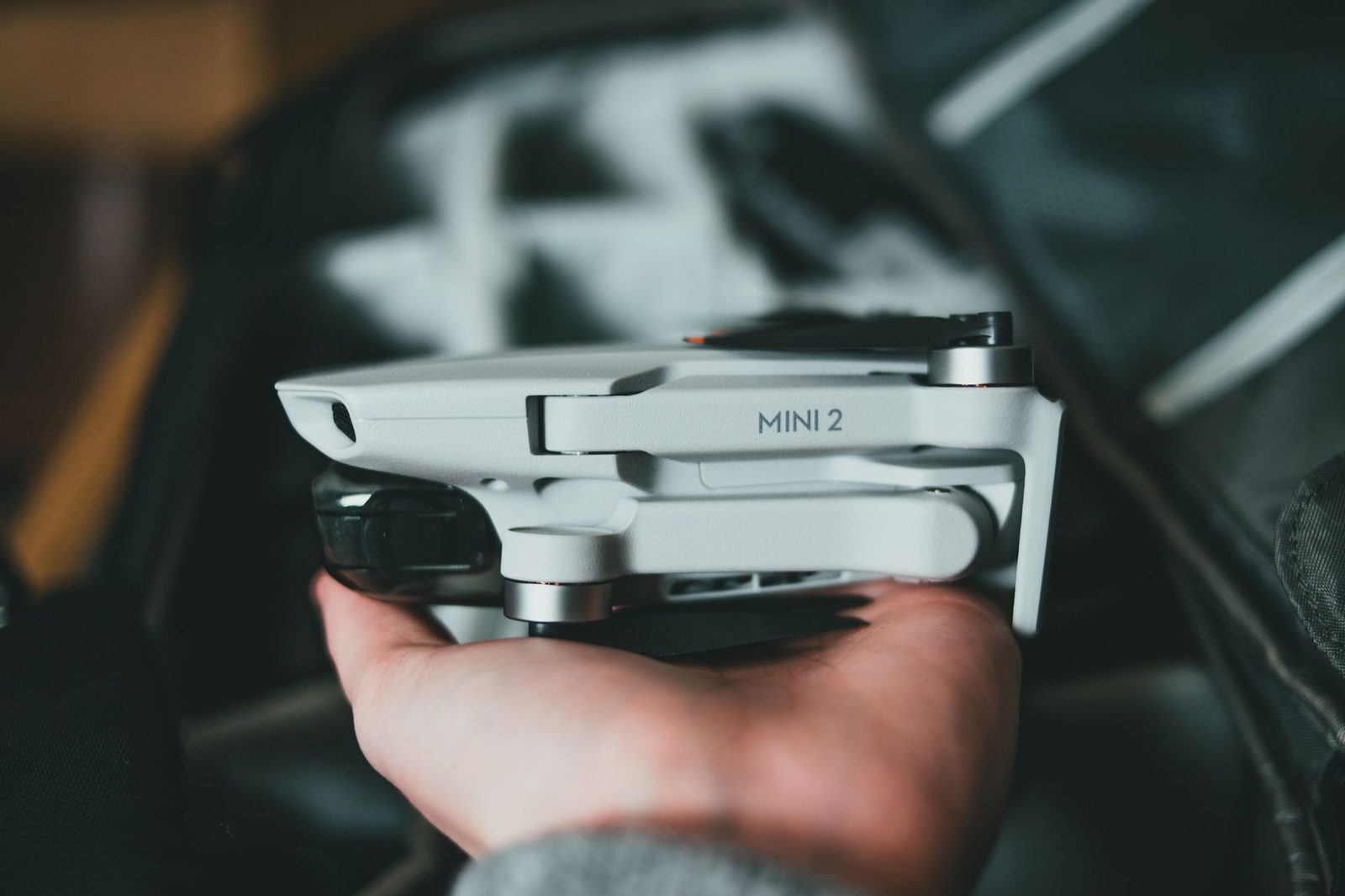
Class C0 drones weighing under 250 grams can fly over uninvolved people in A1. This includes popular models like the DJI Mini 4 Pro and similar sub-250g drones. Class C1 drones weighing under 900 grams can also fly in A1, but they should not intentionally fly over uninvolved people. They can fly near people but the pilot should avoid deliberately passing directly overhead. Privately built drones under 250 grams can fly in A1 under the same conditions as C0 drones.
Training Required for A1
A C0 drone does not require the formal A1/A3 online exam solely because it has a camera. The camera normally affects operator registration when it can capture personal data and the aircraft is not a toy. A C1 operation requires the A1/A3 online training and theory exam. Reading the manufacturer instructions and learning the operating rules remains essential for every aircraft.
Where You Can Fly in A1
A1 operations can take place in most areas including near residential and commercial buildings, parks and public spaces, rural areas, and even over people with the lightest drones. The key restrictions are no flying over assemblies of people, meaning crowds or organized gatherings, compliance with airspace restrictions and geographic zones, and maintaining visual line of sight. A1 is the subcategory that gives you the most flexibility for everyday flying with a small drone.
Practical Example
You have a DJI Mini and want to photograph a village from above on a quiet Sunday morning. A few people are walking on the streets below. Under A1 with a sub-250g drone, you can fly near these people and even briefly pass over them as part of your flight path. You should not, however, hover directly over a group of people having a picnic in the park below.
Subcategory A2: Close to People
A2 is for pilots who need to fly closer to people than A3 allows but with medium-sized drones that are too heavy for A1.
What Drones Can Fly in A2
Only Class C2 drones under 4 kilograms with specific safety features can fly in A2. These drones must have a low-speed mode that limits speed and allows reduced distances from people. The transition period that once let some legacy sub-2 kilogram drones fly under A2 rules ended on 1 January 2024, so A2 now effectively requires a C2-classified drone.
Training Required for A2
A2 requires more extensive training than A1. You must first complete the A1/A3 online training and exam. Then you must complete practical self-training where you practice flying maneuvers and emergency procedures. Finally you must pass the A2 theory exam, which covers additional topics including meteorology, drone flight performance, and risk mitigation. The A2 certificate is sometimes called the remote pilot competency certificate.
Distance Rules in A2
In normal flight mode, you must maintain at least 30 meters horizontal distance from uninvolved people. In low-speed mode, which limits the drone's speed and thus the energy in a potential impact, this distance can be reduced to 5 meters. You must never fly directly over uninvolved people, regardless of speed mode. You must also stay away from assemblies of people.
Where You Can Fly in A2
A2 allows operations in areas closer to people than A3, including near residential areas, commercial zones, parks, and other populated locations. This makes it suitable for real estate photography near buildings, event coverage from a safe distance, urban landscape photography where some people may be nearby, and commercial operations in semi-populated areas. A2 strikes a balance between the freedom of A1 and the restrictions of A3 for medium-sized drones.
Subcategory A3: Far from People
A3 is the most restrictive in terms of where you can fly but the most permissive in terms of what drone you can use.
What Drones Can Fly in A3
Almost any drone under 25 kilograms can fly in A3, including Class C2, C3, and C4 drones, privately built drones under 25 kilograms, and legacy drones without class markings. Since the class-marking transition ended on 1 January 2024, unmarked legacy drones of 250 grams or more are in fact restricted to A3. This makes A3 the default subcategory for larger drones and older models.
Training Required for A3
A3 requires only the basic online training course and examination, the same as A1. This covers fundamental drone safety, airspace rules, and regulatory requirements. No additional practical training or advanced exams are needed.
Where You Can Fly in A3
A3 has the strictest location requirements. No uninvolved person may be endangered within the operating range, and the operation must remain at least 150 metres horizontally from residential, commercial, industrial and recreational areas. A field or remote beach is not automatically suitable if people, site rules, wildlife restrictions or a geographical zone conflict with the plan.
Practical Example
You have a DJI Mavic 3 and want to photograph a mountain landscape. You drive to a remote area, set up in a field far from any buildings or people, and fly over uninhabited terrain. This is a classic A3 operation. You can fly your larger, heavier drone freely because you are far from anyone who could be at risk.
Legacy Drones After the Transition
Many drones still in use were manufactured before the EU class-marking system (C0 through C4) and carry no class marking — these are called legacy drones. The transition regime that once governed them ended on 1 January 2024, and the rules are now much simpler.
Legacy Drones Under 250 Grams
These may still be flown in A1 — over uninvolved people, but never over assemblies or crowds — just like a C0 drone.
Legacy Drones From 250 Grams to 25 Kilograms
These may now only be flown in A3: far from people and away from residential, commercial, industrial and recreational areas. The earlier allowances that let 250-gram to 2-kilogram legacy drones fly in A1 or A2 no longer apply.
Common Questions About Open Category
Several questions come up frequently when pilots try to understand Open category rules.
Can I Fly Commercially in Open Category
Yes. The EU framework does not distinguish between recreational and commercial operations at the category level. If your commercial flight meets Open category requirements regarding drone weight, distance from people, and pilot competency, you can operate commercially without additional authorization. Many commercial photographers, real estate agents, and content creators work within Open category rules.
What Happens If I Fly Outside Open Category Rules
If the operation does not meet the Open-category criteria, it normally needs the appropriate Specific-category route, such as a declaration under a Standard Scenario or an operational authorisation. A geographical zone can separately require a flight authorisation even when the operation otherwise remains Open. Flight over assemblies of people is not made acceptable merely by moving from Open to a generic authorisation request.
Do I Need Insurance in Open Category
It depends on the country, aircraft and operation. EU Regulation 785/2004 provides the framework for aircraft of 20 kg and above; below that, national rules differ by weight, subcategory or purpose. Check the current insurance section of the destination country guide and obtain written confirmation that the policy covers the territory and operation.
Can I Fly at Night in Open Category
Yes. Night flying is allowed in the Open category across the EU — there is no daytime-only rule. Drones with a C-class marking must show a flashing green light at night, and you must still keep the drone within visual line of sight, so a bright light and good orientation are essential. Some sensitive zones or local rules may add restrictions, so check the geo-zone map for your take-off location.
Choosing the Right Subcategory for Your Needs
The subcategory that works best for you depends on your typical flying style.
If you mostly fly a small drone in varied locations including near people and buildings, A1 with a sub-250g drone offers the most flexibility. If you need to fly a larger drone for better camera quality and need to work near populated areas, A2 with its additional training and distance requirements is appropriate. If you primarily fly in rural or remote areas and want to use any drone without restriction on type, A3 is straightforward and requires minimal training.
Many pilots find that starting with A1 using a lightweight drone and later adding A2 certification provides the broadest operational flexibility across different European flying scenarios.
Conclusion
Official Sources
The EU Open category provides the baseline for most low-risk operations. Select A1, A2 or A3 from the aircraft and real operating environment, complete the required competency, and then check national geographical zones, insurance and site restrictions before every flight.
Rules change and vary by country. Check the national authority before you fly — every country page links straight to it.