🇵🇹 Country guide · updated 2026-09
Drone laws in Portugal
Portugal is easier than its reputation in one respect and harder in another.
At a glance
- Registration
- Free
- Registration portal
- ANAC UAS portal
- Maximum height
- 120 m above ground level in the Open category.
- Insurance
- Required above 900 g
Portugal is easier than its reputation in one respect and harder in another. Registration is genuinely free, and an EU registration carries across without fuss. But the country runs a second permission that has no equivalent anywhere else in the EU: capturing images from the air requires authorisation from the National Aeronautical Authority, whether or not you plan to publish them. It costs nothing and it is filed online, but almost no visitor knows it exists. Two further things catch people: insurance is required from 900 grams rather than the EU's 20 kilograms, and the registration portal is gated behind a Portuguese digital identity that has to be collected in person.
Country-specific decision path
Before you choose a launch point in Portugal
- Confirm your operator paperwork Registration required — free. In the EU. One EU/EEA operator registration covers this country. Open ANAC UAS portal
- Check the exact route on the official map ANAC Digital No-fly Tool is the national starting point; read every condition covering the complete route, not only the launch pin. Open ANAC Digital No-fly Tool
- Apply the local layer An EU or EEA registration is valid in Portugal and should not be duplicated. Review the Portugal zone and nature checks
Registration in Portugal
Portugal applies Regulations 2019/947 and 2019/945 through Decreto-Lei 87/2021, and no new national drone legislation has been enacted since — ANAC's own legislation index, current to May 2026, still lists only that decree-law, Portaria 2/2021, Decreto-Lei 58/2018 and Regulation 1093/2016. What makes Portugal distinctive is not the aviation framework but two national layers beside it: the 900 g insurance threshold, and an image-capture authorisation regime that predates drones entirely, resting on instruments from 1958 and 1960.
Registration is free, but it must be revalidated every three years — miss the window and it is revoked outright, with no way back except a fresh registration. The real obstacle for a visitor is not the fee but the login: the portal authenticates with Chave Móvel Digital, a Portuguese digital identity that ANAC cannot issue and which must be obtained in person at a Loja do Cidadão or a Portuguese consulate. ANAC's own two sources disagree on what a non-resident needs — the English page asks for a Portuguese address and tax number, while the October 2025 platform tutorial tells third-country visitors to enter NIF 999999999 and their accommodation address.
What it costs: Free — Three years.
In the EU. One EU/EEA operator registration covers this country.
How to register
- Register as an operator in your own country if you live in the EU or EEA — a Portuguese registration is not needed and not wanted
- If Portugal is the first EASA state you will fly in: register at uas.anac.pt, which requires Chave Móvel Digital
- Arrange third-party liability insurance if the drone is over 900 g — this is Portuguese law, not the EU 20 kg rule
- Apply to the AAN for authorisation to capture images, at imagensaereas.aan.pt — free, but separate from everything above
- Check the geographical zones at dnt.anac.pt, and remember mainland protected areas are not in that dataset
- For a protected area on the mainland, request ICNF's opinion at rtn@icnf.pt with the flight area attached as KMZ
You register as an operator — not the drone. Registration is required from 250 g, or below 250 g if the drone can transfer more than 80 J of energy, or if it carries a sensor able to capture personal data. CE-marked toys are exempt. Put your operator number on every drone you fly and set it in Remote ID.
Flight rules
- Maximum height
- 120 m above ground level in the Open category.
- Line of sight
- Visual line of sight required for Open category operations. BVLOS operations available under Specific category with appropriate authorization.
- Weight classes
- Standard EU weight categories apply. Privacy-capable drones require registration regardless of weight. Over 25kg requires Certified category.
- Night flying
- Night flying is allowed in the Open category. A drone with a class mark must show a flashing green light so it stays visible. You still have to keep it in sight, which is harder after dark, and national geographical zones apply exactly as they do in daylight.
- Weather
- Safe weather conditions required. Atlantic weather can change rapidly - careful monitoring essential. Island operations require special attention to wind.
Class marks C0–C6 have been mandatory since 1 January 2024. The transition period is over: a drone without a class mark may only be flown in A1 (under 250 g) or A3 (under 25 kg).
Where you may not fly
There is no single EU-wide distance from airports. Each country publishes its own UAS geographical zones, so check the national map or app before every flight.
Airports and controlled airspace
Portugal does not use a single airport distance, and the «5 km rule» that circulates for Portugal does not appear in any Portuguese instrument we could find. The nine international airports — Lisbon, Porto, Faro, Madeira, Porto Santo, Ponta Delgada, Santa Maria, Flores and Horta — sit inside drawn rectangular no-fly polygons where the Open category is not permitted at all. Around them sit three tiered protection areas capping flight at 30, 60 and 80 metres respectively. An aerodrome or heliport without an ATZ carries a 2.5 km radius from the reference point requiring express authorisation, and medical heliports carry a 1 km radius closed to the Open category. Those two radii are real and come from ANAC Regulation 1093/2016.
Towns and cities
Urban flying restricted in Open category A1 and A2 only with specific conditions. Lisbon and Porto historic centers have additional local restrictions.
Protected nature
Protected areas need authorisation from the environmental authority, and which authority depends on where you are: ICNF on the mainland, IFCN for Madeira, and the Direção Regional do Ambiente for the Azores. Applications on the mainland go to rtn@icnf.pt with the flight area attached as a KMZ, and ICNF states plainly that its opinion does not replace any other permission you need. There is a trap in the data here worth knowing: ANAC's own zone tutorial says mainland protected areas are not available in the downloadable geo-zone dataset. A pilot who checks only the map or the app will not see them.
Government and military sites
Military installations, government buildings, and prisons are prohibited zones. Maritime authority facilities require clearance.
Other restrictions in Portugal
- Aerial image capture over Portuguese territory needs a separate authorisation from the Autoridade Aeronáutica Nacional — see below
- Coastal and beach operations are coordinated with the Autoridade Marítima Nacional through the local capitania, whose requirements are set locally
- Military restricted areas around Sintra and the Lisbon area require AAN authorisation
- Monchique, Lousã and Mirandela carry firefighting airspace reservations running to 31 December 2026
Insurance
Portuguese law sets the threshold at 900 g, not at the EU's 20 kg. Decreto-Lei 58/2018 article 10 requires third-party liability cover for any drone with a maximum operating mass above 900 grams, and Portaria 2/2021 sets the minimum capital — in force since 3 February 2021. Note that the registration articles of that decree-law were repealed in 2021 but the insurance article was not. We have not been able to read the minimum sums in Portaria 2/2021 from an official source, so we do not quote a figure.
Penalties
Portugal's drone decree-law contains no amounts of its own — it classifies breaches as leve, grave or muito grave and routes them to the civil aviation penalty regime in Decreto-Lei 10/2004, which is where the figures live. ANAC may also suspend certificates for up to two years. A government proposal approved in May 2026 would index these amounts and revise them every three years, but it is not yet law. The «€7,500 maximum» quoted on many drone sites comes from a 2018 draft that was never enacted.
| Breach | Penalty | Source |
|---|---|---|
| Minor breach (leve), individual | €150–€300 negligent, €300–€1,000 intentional | Decreto-Lei 10/2004 art. 9. Administrative. |
| Serious breach (grave), individual | €250–€500 negligent, €500–€1,500 intentional | Decreto-Lei 10/2004 art. 9. Administrative. |
| Very serious breach (muito grave), individual | €1,000–€2,500 negligent, €2,000–€4,000 intentional | Decreto-Lei 10/2004 art. 9. Administrative — the top band for a private person. |
| Companies | From €350 up to €250,000 | Scales by enterprise size; the ceiling applies to a large company acting intentionally. The intermediate tiers are set out in art. 9 itself. |
Whatever the amount, the pattern across Europe is the same: paperwork failures are handled administratively, while flying near aircraft, over crowds, or inside a protected zone is what turns a case into a prosecution.
Visiting Portugal with a drone
An EU or EEA registration is valid in Portugal and should not be duplicated. What visitors consistently miss is that Portugal has a second, entirely separate permission: the Autoridade Aeronáutica Nacional requires authorisation to capture images from the air over Portuguese territory, and its own page says this applies whether or not you intend to publish them. It is free, filed at imagensaereas.aan.pt, and ten days' notice guarantees a decision. Note that ANAC's guide implies a 900 g trigger for it while the AAN's own page states no weight threshold at all — the two authorities are not aligned in print, so if you are flying a small camera drone, ask rather than assume.
Commercial work
The AAN image authorisation applies to commercial and private capture alike, so it is not the dividing line here. What separates professional work is the ordinary EU route into the Specific category, plus a cross-border application to ANAC for operators authorised elsewhere — ANAC decides within 60 days, extendable by 30. Portugal's own declarative national scenarios are gone: they could be declared only until the end of 2023 and used only until 2 December 2025, a deadline that has now passed.
Location planning
These are well-known photographic subjects to research, not recommended launch points or proof that a flight is allowed. Check the exact route against official airspace, nature, land-manager and people restrictions.
- Algarve coastal cliffs and beaches (check seasonal restrictions)
- Douro Valley vineyards
- Sintra palace grounds (restrictions near monuments)
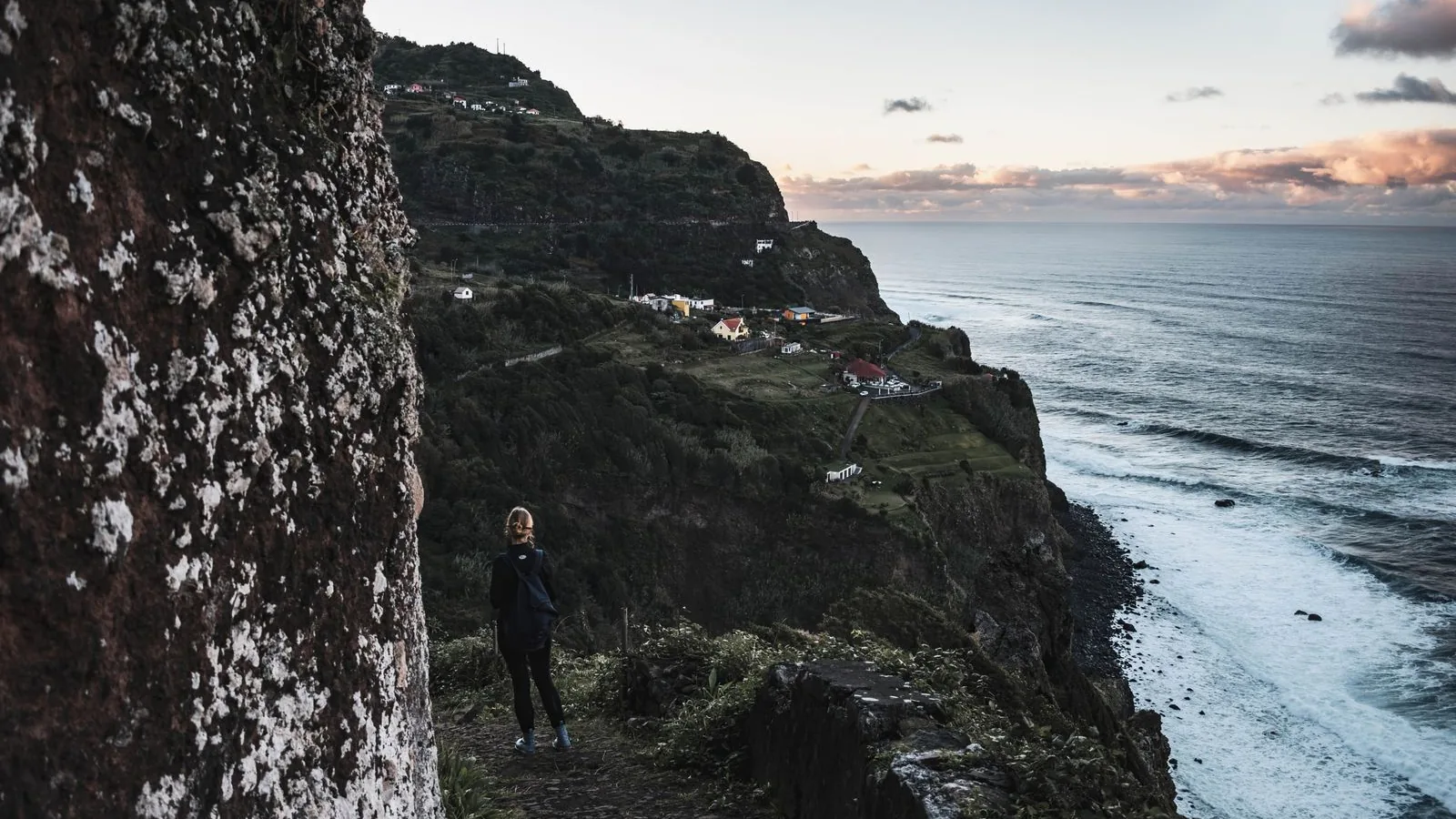
- Madeira levada trails and coastline
- Azores volcanic landscapes
- Alentejo plains and cork oak forests
Apps and official maps
- dnt.anac.pt — the official geographical-zone map, downloadable as KML or ED-269. Note ANAC's older guides still point at uas.anac.pt/explore, which has moved
- Voa na Boa — ANAC's zone app, but it covers mainland Portugal only and is no use for Madeira or the Azores
- imagensaereas.aan.pt — the AAN platform for the image-capture authorisation, which is a separate obligation from anything ANAC runs
Practical tips
- The AAN authorisation is the one visitors miss. It is required for capturing images from the air, it is free, and it has nothing to do with your EU registration
- AAN authorisations have been capped at 30 consecutive days since 24 March 2025 — an older open-ended one is no longer how it works
- Insurance is required from 900 g here, well below the EU's 20 kg
- Your registration expires after three years, and letting it lapse revokes it rather than suspending it
- Do not trust the zone map for mainland protected areas — ANAC says they are not in the dataset
- Madeira and the Azores answer to different environmental authorities than the mainland, and the Voa na Boa app does not cover them
- The «€7,500 maximum drone fine» that circulates for Portugal was a 2018 draft law that was never enacted
Questions about flying in Portugal
Do I need to register to fly a drone in Portugal?
Registration required — free. In the EU. One EU/EEA operator registration covers this country.
How high can I fly in Portugal?
120 m above ground level in the Open category.
Do I need drone insurance in Portugal?
Portuguese law sets the threshold at 900 g, not at the EU's 20 kg. Decreto-Lei 58/2018 article 10 requires third-party liability cover for any drone with a maximum operating mass above 900 grams, and Portaria 2/2021 sets the minimum capital — in force since 3 February 2021. Note that the registration articles of that decree-law were repealed in 2021 but the insurance article was not. We have not been able to read the minimum sums in Portaria 2/2021 from an official source, so we do not quote a figure.
Can I fly a drone at night in Portugal?
Night flying is allowed in the Open category. A drone with a class mark must show a flashing green light so it stays visible. You still have to keep it in sight, which is harder after dark, and national geographical zones apply exactly as they do in daylight.
What are the penalties for breaking drone rules in Portugal?
Portugal's drone decree-law contains no amounts of its own — it classifies breaches as leve, grave or muito grave and routes them to the civil aviation penalty regime in Decreto-Lei 10/2004, which is where the figures live. ANAC may also suspend certificates for up to two years. A government proposal approved in May 2026 would index these amounts and revise them every three years, but it is not yet law. The «€7,500 maximum» quoted on many drone sites comes from a 2018 draft that was never enacted.
Official sources
Primary sources used for this guide, checked September 2026. Open the live national source again before flying; geographical zones and temporary restrictions can change between reviews.
- National authority ANAC (Autoridade Nacional da Aviação Civil) — official drone information
- Registration ANAC UAS portal
- Official zones and map ANAC Digital No-fly Tool — ANAC
- European framework Regulation (EU) 2019/947 — rules and procedures for operating unmanned aircraft
- Official maps directory EASA — national aviation authorities and geographical-zone sources
Rules change, and national authorities publish the current position. Before you fly, check ANAC (Autoridade Nacional da Aviação Civil) — it is linked at the top of this page too.