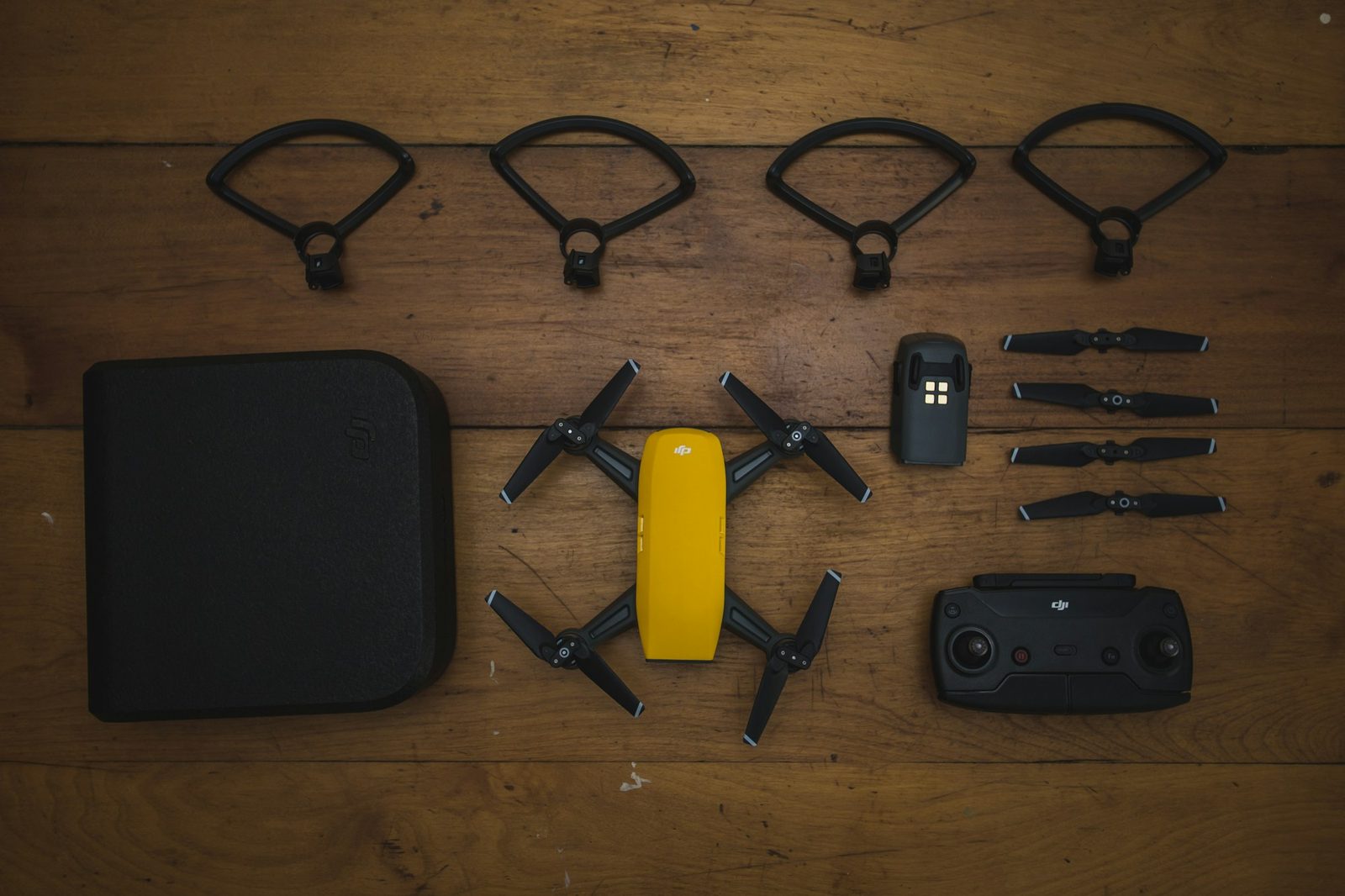
Choosing a first drone for European rules
The useful question is not which model topped a product list this year. It is which class mark, weight and operating subcategory fit the places where you expect to fly. Those details determine your training, your distance from people and whether an older unmarked aircraft is confined to A3.
This guide does not rank current products or quote prices that will be stale within months. It gives you a buying method that still works when manufacturers replace their ranges.
Start with the class mark, then check the weight
Look for the permanent C0, C1, C2, C3 or C4 class label on the aircraft or its product documentation. The class mark is not the same thing as a CE mark, and a seller describing a drone as “EU compliant” is not enough. Ask to see the actual class label before buying.
C0: the simplest starting point
A C0 drone is under 250 g and operates in A1. It gives a new pilot the most flexibility around uninvolved people, although flying over assemblies of people is never allowed. If it has a camera capable of capturing personal data, you normally still register as an operator unless the drone is a CE-marked toy. Sub-250 g does not mean unregistered, unrestricted or exempt from geographical zones.
C1: more capability, with the A1/A3 test
A C1 drone is under 900 g and also operates in A1, but the remote pilot must complete the A1/A3 online training and exam. You should not intentionally fly over uninvolved people. A C1 aircraft can make sense when camera, wind performance or payload matters more than minimum weight.
C2: useful only if you understand A2
A C2 drone is under 4 kg. To use it in A2 near uninvolved people you need the A2 certificate of competency and must respect the applicable horizontal distance. Otherwise it flies in A3, well away from people and at least 150 m from residential, commercial, industrial and recreational areas. That is a substantial practical limitation for a casual traveller.
Unmarked and older drones
The transition period ended on 1 January 2024. An aircraft without a class mark may now fly in A1 only when it is under 250 g; at 250 g or above it is limited to A3, up to 25 kg. A good second-hand price does not compensate for buying an aircraft you cannot legally use where you intended.
Choose the operating envelope before the brand
Write down three real flights you want to make: for example a quiet coastal viewpoint, a rural property and a city-edge park. Then check the official geographical-zone map and the people-distance rules for each. If those flights require A1 flexibility, limit the shortlist to a genuine C0 or C1 aircraft. If they can be done in A3, a larger platform may be reasonable.
Do not buy on the assumption that obstacle avoidance or a manufacturer's built-in map makes a flight legal. Sensors can miss wires, bare branches and low-contrast surfaces. Manufacturer geofencing is advisory and may not match the national map or temporary restrictions.
Features that matter after compliance
Wind performance with a return margin
A wind rating is a limit, not a comfortable target. A light aircraft may fly out with a tailwind and fail to return against it. Compare the manufacturer's published wind resistance, but plan to turn back well before the battery estimate becomes tight. Coastal and mountain wind can change sharply with terrain and height.
Return-to-home behaviour
Check whether the aircraft uses a recorded home point, how it behaves after signal loss and whether the return height can be set. The correct height depends on the site: high enough to clear obstacles, but never treated as permission to exceed the legal 120 m ceiling. Practise the function in open ground before relying on it.
Obstacle sensing
Forward-only sensors protect a different set of mistakes from omnidirectional sensing. Read which directions are covered and when the sensors are disabled by flight mode, low light or speed. Sensing is useful training support, not a substitute for visual line of sight.
Battery system and honest flight time
Compare the full battery options, not just the longest advertised duration. A higher-capacity pack can push an otherwise sub-250 g aircraft over the threshold printed for its standard battery. For air travel, calculate watt-hours from the label and follow the airline's rules: spare lithium batteries belong in hand baggage with protected terminals, and batteries above 100 Wh may require prior approval.
Camera and storage
A three-axis gimbal usually matters more to a beginner than headline resolution. Check whether the aircraft records to a removable card, whether the controller stores a usable backup, and whether replacement cards meet the required write speed. RAW photographs and flat video profiles are useful only if you intend to edit them.
A restrained first kit
- One additional battery is usually enough while you learn; confirm that it does not change the aircraft's take-off mass or class conditions.
- A protective case and gimbal guard prevent transport damage more effectively than decorative accessories.
- Spare propellers and the correct tool solve the field failure you can realistically repair.
- A high-endurance memory card sized for a full day avoids constant file management.
- A visible operator-number label and digital copies of registration and competency documents make inspections simpler.
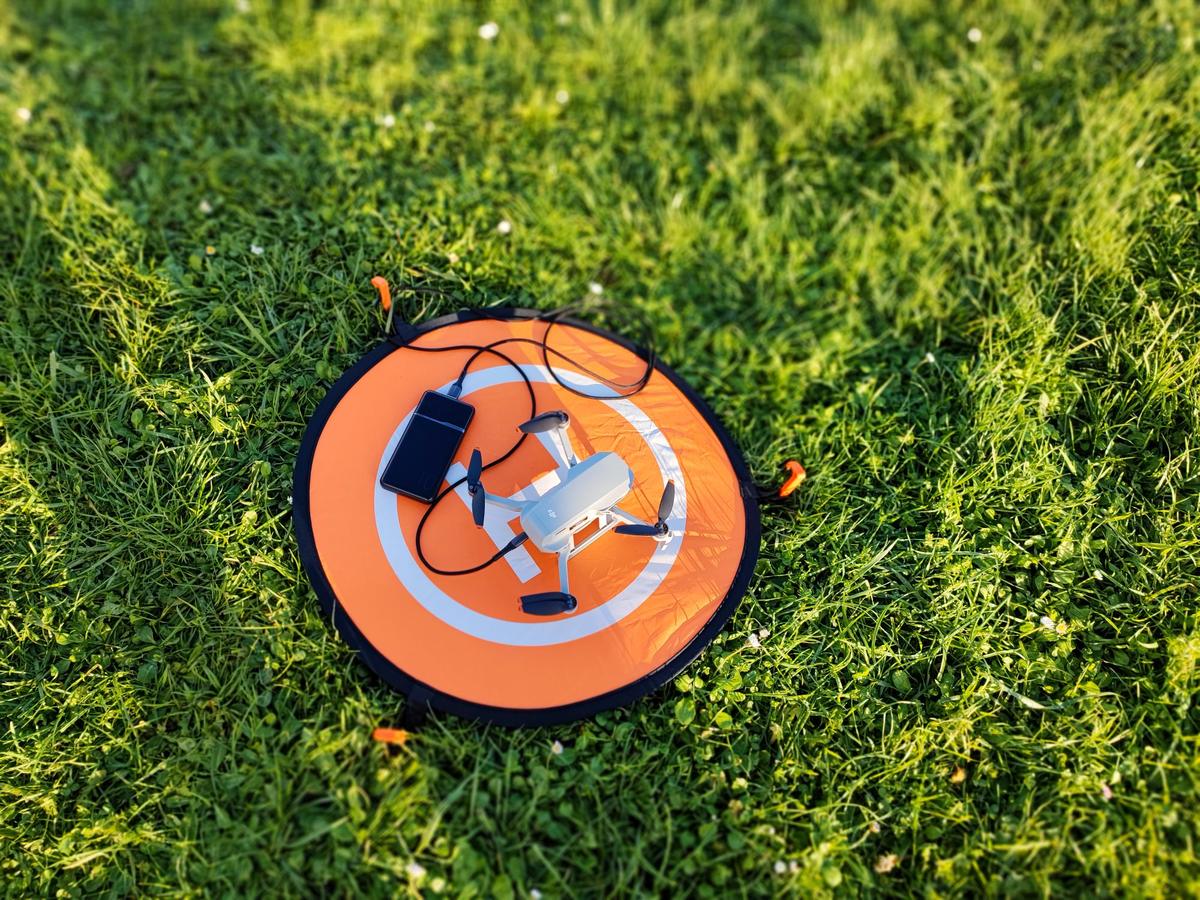
A landing pad can be useful on sand, snow or long grass. Filters, specialised chargers and large accessory bundles can wait until your first flights show a real need.
Checks before paying
- Photograph the class mark and confirm it against the manual for the exact variant.
- Check the take-off mass with the battery and accessories you will use.
- Verify Remote ID support where the class and operation require it.
- Read the warranty territory and confirm parts, batteries and repair service are available where you live.
- Open the national zone map for the places you expect to fly; do this before buying, not after.
- Budget for registration, training and insurance as well as the aircraft. National costs and insurance duties are listed in our country guides.
For a used aircraft, verify that the seller has removed it from their account, inspect the battery cycle count and swelling, check the gimbal after cold start, and confirm that the physical class label has not been added or altered unofficially.
Official sources
- EASA — drones in the Open category
- EUR-Lex — Regulation (EU) 2019/945 on class-marked aircraft
- IATA — lithium batteries in passenger baggage
The practical default
For most first-time recreational pilots, a genuine C0 aircraft under 250 g is the least complicated place to start. It still requires operator registration when it carries a camera, it still follows national geographical zones, and it still cannot fly over crowds. What it removes is much of the distance and training complexity that makes a heavier first aircraft difficult to use.
If your work needs more camera, wind or payload capability, choose C1 or C2 deliberately and complete the required training before the first flight. The best beginner drone is not a permanent model name; it is the lightest class-marked aircraft that can safely perform your real flights.
Rules change and vary by country. Check the national authority before you fly — every country page links straight to it.