🇩🇪 Country guide · updated 2026-09
Drone laws in Germany
Germany writes its drone rules more concretely than anyone else in Europe — eleven categories of restricted place, each with a distance in metres and a stated way out.
At a glance
- Registration
- €20 for private individuals, €50 for legal entities
- Registration portal
- LBA UAS registration
- Maximum height
- 120 m above ground level in the Open category.
- Insurance
- Required for all flights
- Authority
- LBA (Luftfahrt-Bundesamt)
Germany writes its drone rules more concretely than anyone else in Europe — eleven categories of restricted place, each with a distance in metres and a stated way out. That precision is a gift once you read it, and a trap if you assume the European rules are the whole story. Two national requirements catch visitors. Insurance is compulsory at any weight, with no small-drone exemption. And flying over a residential plot is prohibited without the occupier's consent unless your drone is both under 250 g and incapable of recording anything — which excludes every camera drone on the market. Nature reserves and national parks are closed by default, and for recreational flying there is no way around that at all.
Country-specific decision path
Before you choose a launch point in Germany
- Confirm your operator paperwork Registration required — €20 for private individuals, €50 for legal entities. In the EU. One EU/EEA operator registration covers this country. Open LBA UAS registration
- Check the exact route on the official map dipul Map Tool is the national starting point; read every condition covering the complete route, not only the launch pin. Open dipul Map Tool
- Apply the local layer An EU or EEA registration is valid in Germany. Review the Germany zone and nature checks
Registration in Germany
Germany applies Regulations 2019/947 and 2019/945, with the national layer in section 21h of the Air Traffic Regulation — an unusually concrete list of eleven zone types with actual distances, rather than the vaguer formulations most states use. That section was amended on 18 December 2025 and now runs to seven subsections, including a power covering U-space airspace and three statutory clauses requiring the government to evaluate the nature-protection, residential and emergency-site rules on a fixed timetable. The transport ministry was also renamed in 2025: pages naming the BMDV as the drone regulator are out of date.
The €20 and €50 figures are correct and the LBA describes the charge as one-off rather than recurring. No expiry date or renewal requirement is published anywhere we could find, so we do not claim one — note that the five-year figure sometimes quoted comes from a data-retention clause in the Aviation Act, not from a validity period. Minimum age 16. Registration requires your insurer's name and policy number, so arrange cover first.
What it costs: €20 for private individuals, €50 for legal entities — No expiry published.
In the EU. One EU/EEA operator registration covers this country.
How to register
- Register as a UAS operator on the LBA UAS portal (uas-registrierung.lba-web.de)
- Complete the online registration form with personal information
- Receive your unique eID (electronic identification) for drone operations
- Affix the registration number to all drones
- Complete online training (Kompetenznachweis) for relevant category
- For A2 subcategory: complete additional training and examination
- Maintain valid registration (renewal required every 5 years)
You register as an operator — not the drone. Registration is required from 250 g, or below 250 g if the drone can transfer more than 80 J of energy, or if it carries a sensor able to capture personal data. CE-marked toys are exempt. Put your operator number on every drone you fly and set it in Remote ID.
Flight rules
- Maximum height
- 120 m above ground level in the Open category.
- Line of sight
- Visual line of sight mandatory for Open category. Germany has active development of BVLOS frameworks under Specific category.
- Weight classes
- All camera-equipped drones require registration regardless of weight (privacy law consideration). Weight classes follow EU C0-C4 categories for airspace rules.
- Night flying
- Night flying is allowed in the Open category. A drone with a class mark must show a flashing green light so it stays visible. You still have to keep it in sight, which is harder after dark, and national geographical zones apply exactly as they do in daylight.
- Weather
- Safe weather conditions mandatory. Operators must assess wind speed, visibility, and precipitation. Manufacturer limitations must be respected.
Class marks C0–C6 have been mandatory since 1 January 2024. The transition period is over: a drone without a class mark may only be flown in A1 (under 250 g) or A3 (under 25 kg).
Where you may not fly
There is no single EU-wide distance from airports. Each country publishes its own UAS geographical zones, so check the national map or app before every flight.
Airports and controlled airspace
Germany writes its zones as a numbered list with actual distances, and the two aerodrome types differ. Around an airfield that is not an airport, the ban runs 1.5 km laterally from the boundary, lifted by the operator's express consent or by flying in the Specific category. Around an airport proper it is 1,000 m laterally from the boundary plus 5 km along the extended runway centreline in the approach and departure sectors — and there the only way in is the Specific category, not consent. Control zones need air traffic control clearance separately.
Towns and cities
There is no German urban ban as such, but there is a rule about homes that has no EU equivalent and that catches almost every tourist flight over a village. Flying over a residential plot is prohibited unless the occupier has expressly consented, or the drone is under 250 g and carries nothing capable of optical or acoustic recording, or you are above 100 m with a justified operational need, prior notice to the residents, outside 22:00 to 06:00, and within noise limits. In practice: a camera drone may not overfly someone's property below 100 m without their permission. Further 100 m bans apply around industrial plants, prisons, military sites, power stations, government buildings, hospitals, federal roads, waterways and railways.
Protected nature
Germany's rule here is stricter than most and is routinely misreported. Flight over nature reserves, national parks and Natura 2000 sites is prohibited by default. It is lifted only by the nature conservation authority's express consent, by state law, or — and this is the part people quote — by an exception requiring all of: not for sport or leisure, above 100 m, the pilot knowing and observing the protection objective, and the airspace being strictly necessary for the purpose. Note what that means: recreational flying never qualifies, and national parks are expressly excluded from the exception altogether. There is no «fly above 100 m and it is fine» route over a national park. That includes the three Wadden Sea national parks along the North Sea coast, and Berchtesgaden in the Alps.
Government and military sites
Berlin's government district sits inside restriction area ED-R 146, a 3 nautical mile radius around the Reichstag with a stricter inner core of 1 nautical mile where a transit permit needs a compelling necessity and written backing from a federal or Berlin authority. Permits come from the federal air traffic supervision office, and air traffic control clearance is not a substitute. A second restricted area covers the Helmholtz centre at Wannsee. The general 100 m ban around constitutional organs, authorities and diplomatic missions applies on top.
Other restrictions in Germany
- Individual exemptions from the zone rules come from the state aviation authority; Upper Bavaria publishes the fee as €50 to €3,500 and asks for ten working days
- Public swimming pools and bathing beaches are closed during operating hours
- Model flying has its own regime: two national associations hold authorisations letting members fly under association rules, including above 120 m
- Cities issue event orders that ban even carrying a drone — Cologne does this for Carnival across the cathedral precinct and the procession routes
Insurance
Germany requires third-party liability cover with no weight threshold at all. The duty sits in the Aviation Act rather than in the drone rules, which is why it catches everything: the Act lists model aircraft as aircraft and adds unmanned systems flown for non-recreational purposes, and the insurance provision contains no exemption for either. The minimum sum for an aircraft under 500 kg is 750,000 Special Drawing Rights. You cannot complete registration without a policy number, and flying uninsured is a separate offence carrying the highest penalty band.
Penalties
These are ceilings, not tariffs. Germany publishes no federal catalogue of per-offence drone fines — the widely circulated German «Drohnen-Bußgeldkatalog» tables giving a euro figure for each breach are unofficial compilations with no instrument behind them, and we do not reproduce them. The actual amount is set case by case by the competent state authority. The €50,000 ceiling is quoted as the applicable figure by the Bavarian Palaces Department in its own drone guidance.
| Breach | Penalty | Source |
|---|---|---|
| Statutory maximum for unmanned aircraft breaches | Up to €50,000 | Aviation Act § 58(3). The same band covers flying uninsured. Administrative, set case by case by the state authority. |
| Statutory maximum for non-compliance with EU air law | Up to €30,000 | Aviation Act § 58(3), lower band. |
Whatever the amount, the pattern across Europe is the same: paperwork failures are handled administratively, while flying near aircraft, over crowds, or inside a protected zone is what turns a case into a prosecution.
Visiting Germany with a drone
An EU or EEA registration is valid in Germany. Two national rules matter far more than the paperwork. First, insurance: required at any weight, and Germany means it. Second, the residential rule — flying over someone's house or garden below 100 m needs their express consent unless your drone is under 250 g with no camera at all, which rules out essentially every drone people travel with. That single rule makes casual flying over German villages and suburbs unlawful in a way visitors do not expect. Nature reserves and national parks are prohibited by default, with no altitude workaround for recreational flying.
Commercial work
The Specific category is where most professional work sits, and Germany's zone exceptions are noticeably friendlier to it: an airport's 1,000 m and 5 km zones can be entered in the Specific category, where no amount of consent will do it in Open. The residential and nature rules also turn on purpose — the nature exception requires the flight not to be for sport or leisure, which is precisely the door commercial work goes through, provided the other conditions hold. Individual exemptions come from the state aviation authority at €50 to €3,500.
Location planning
These are well-known photographic subjects to research, not recommended launch points or proof that a flight is allowed. Check the exact route against official airspace, nature, land-manager and people restrictions.
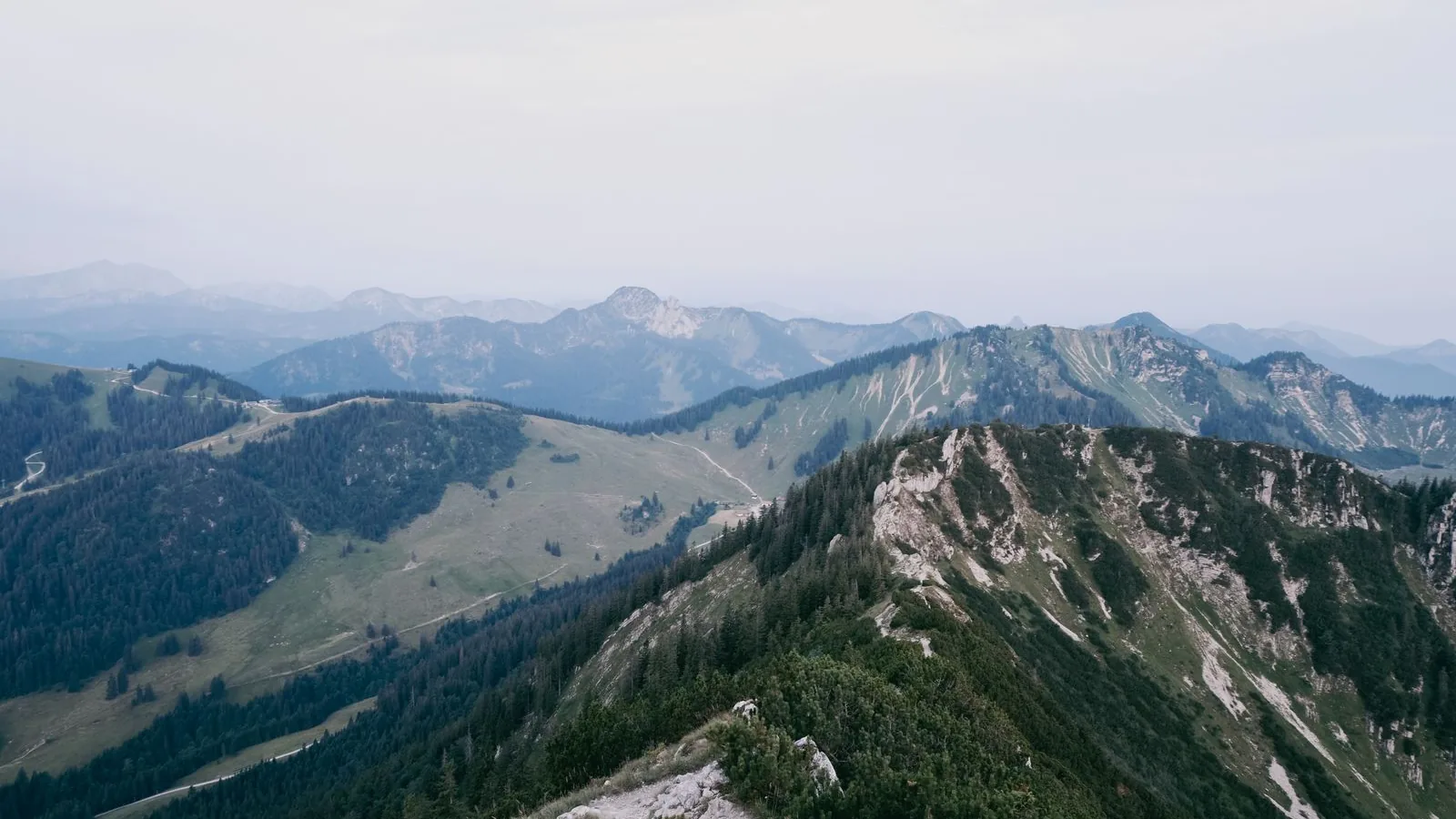
- Bavarian Alps mountain scenery
- Black Forest landscapes
- Rhine Valley vineyards and castles (check individual restrictions)
- Baltic and North Sea coastlines
- Saxon Switzerland National Park (permit required)
- Harz Mountains region
Apps and official maps
- dipul.de — the Digital Platform for Unmanned Aviation, built by the air navigation service on the ministry's behalf. This is the official map of the geographical zones and the one the LBA tells you to use
- uas-registration.lba-openuav.de — LBA operator registration and the A1/A3 exam
Practical tips
- Insurance has no weight threshold in Germany, and you cannot register without a policy number
- The rule about flying over homes is the one visitors break. A camera drone over someone's plot below 100 m needs their consent
- National parks have no «above 100 m» escape route — the exception excludes them, and recreational flying never qualifies anywhere
- The Wadden Sea coast is three national parks. That is most of the German North Sea shoreline
- Airports and airfields are different: 1,000 m plus 5 km down the centreline for the former, 1.5 km for the latter
- Berlin's government district is a restricted area with its own permit process; ATC clearance does not cover it
- German «Bußgeldkatalog» tables listing a euro figure per offence are unofficial. Only the statutory ceilings are published
Questions about flying in Germany
Do I need to register to fly a drone in Germany?
Registration required — €20 for private individuals, €50 for legal entities. In the EU. One EU/EEA operator registration covers this country.
How high can I fly in Germany?
120 m above ground level in the Open category.
Do I need drone insurance in Germany?
Germany requires third-party liability cover with no weight threshold at all. The duty sits in the Aviation Act rather than in the drone rules, which is why it catches everything: the Act lists model aircraft as aircraft and adds unmanned systems flown for non-recreational purposes, and the insurance provision contains no exemption for either. The minimum sum for an aircraft under 500 kg is 750,000 Special Drawing Rights. You cannot complete registration without a policy number, and flying uninsured is a separate offence carrying the highest penalty band.
Can I fly a drone at night in Germany?
Night flying is allowed in the Open category. A drone with a class mark must show a flashing green light so it stays visible. You still have to keep it in sight, which is harder after dark, and national geographical zones apply exactly as they do in daylight.
What are the penalties for breaking drone rules in Germany?
These are ceilings, not tariffs. Germany publishes no federal catalogue of per-offence drone fines — the widely circulated German «Drohnen-Bußgeldkatalog» tables giving a euro figure for each breach are unofficial compilations with no instrument behind them, and we do not reproduce them. The actual amount is set case by case by the competent state authority. The €50,000 ceiling is quoted as the applicable figure by the Bavarian Palaces Department in its own drone guidance.
Official sources
Primary sources used for this guide, checked September 2026. Open the live national source again before flying; geographical zones and temporary restrictions can change between reviews.
- National authority LBA (Luftfahrt-Bundesamt) — official drone information
- Official zones and map dipul Map Tool — DFS / Federal Ministry
- European framework Regulation (EU) 2019/947 — rules and procedures for operating unmanned aircraft
- Official maps directory EASA — national aviation authorities and geographical-zone sources
Rules change, and national authorities publish the current position. Before you fly, check LBA (Luftfahrt-Bundesamt) — it is linked at the top of this page too.