🇫🇷 Country guide · updated 2026-09
Drone laws in France
France has the most misreported drone rule in Europe.
At a glance
- Registration
- Free
- Registration portal
- AlphaTango
- Maximum height
- 120 m above ground level in the Open category.
- Insurance
- Not required by national law
France has the most misreported drone rule in Europe. Almost every English-language guide states that French registration starts at 800 g rather than the EU's 250 g — which sounds like good news for anyone with a small camera drone, and is wrong. France has two separate registrations. Operator registration follows the normal EU rule and catches every camera drone whatever it weighs. The 800 g threshold belongs to a different obligation: registering the aircraft itself, and fitting it with an electronic signalling device that no other European country requires. The other thing worth knowing is recent. Flight over built-up areas was prohibited outright until 1 January 2026, when it opened to professional activity — and to professional activity only.
Country-specific decision path
Before you choose a launch point in France
- Confirm your operator paperwork Registration required — free. In the EU. One EU/EEA operator registration covers this country. Open AlphaTango
- Check the exact route on the official map Géoportail — Restrictions UAS catégorie ouverte is the national starting point; read every condition covering the complete route, not only the launch pin. Open Géoportail — Restrictions UAS catégorie ouverte
- Apply the local layer An EU or EEA operator registration is valid in France, and a non-EU visitor registers in the first EU state they fly in. Review the France zone and nature checks
Registration in France
France applies Regulations 2019/947 and 2019/945, with the national detail carried by the arrêté of 3 December 2020 as amended — most recently on 23 December 2025, which opened urban flight to professionals from 1 January 2026. France also keeps two national requirements with no EU counterpart: registration of the aircraft itself at 800 g and above, and an electronic signalling device on the same aircraft, broadcasting identifier, position, take-off point, speed and track. The DGAC reissued its Open-category guide as Edition 2 on 31 December 2025.
France has two registrations at two thresholds, and conflating them is the most common error about French drone law. Operator registration follows the ordinary EU rule — required above 250 g, or at any weight if the drone carries a sensor that can collect personal data, which in practice means every camera drone. Separately, the owner must register the aircraft itself on AlphaTango at 800 g and above, and fit it with an electronic signalling device. That second duty is French-only, has no EU equivalent, and is not satisfied by your home registration.
What it costs: Free — Valid 5 years.
In the EU. One EU/EEA operator registration covers this country.
How to register
- Register as a European UAS operator — in your own country if you live in the EU or EEA, or on AlphaTango if France is the first EU state you will fly in
- Complete the A1/A3 online training and exam; the attestation is valid five years
- If the drone weighs 800 g or more: register the aircraft itself on AlphaTango as its owner, and affix the registration number to the airframe
- If the drone weighs 800 g or more: fit an electronic signalling device that broadcasts the identifier, position, take-off point, ground speed and track
- Check the Géoportail restriction map before flying — but treat the arrêté, not the map, as the legal reference
You register as an operator — not the drone. Registration is required from 250 g, or below 250 g if the drone can transfer more than 80 J of energy, or if it carries a sensor able to capture personal data. CE-marked toys are exempt. Put your operator number on every drone you fly and set it in Remote ID.
Flight rules
- Maximum height
- 120 m above ground level in the Open category.
- Line of sight
- Visual line of sight mandatory for Open category. France has specific BVLOS provisions under Specific category with appropriate mitigations.
- Weight classes
- Drones 250g-800g require online training completion. Drones over 800g require theoretical attestation. All camera-equipped drones require registration regardless of weight.
- Night flying
- Night flying is allowed in the Open category. A drone with a class mark must show a flashing green light so it stays visible. You still have to keep it in sight, which is harder after dark, and national geographical zones apply exactly as they do in daylight.
- Weather
- Good meteorological conditions required. Wind limits depend on drone specifications. Minimum visibility requirements apply.
Class marks C0–C6 have been mandatory since 1 January 2024. The transition period is over: a drone without a class mark may only be flown in A1 (under 250 g) or A3 (under 25 kg).
Where you may not fly
There is no single EU-wide distance from airports. Each country publishes its own UAS geographical zones, so check the national map or app before every flight.
Airports and controlled airspace
Restrictions around aerodromes are published on the Géoportail UAS map rather than as a single national distance. Read the map for the specific field: the constraint around a major airport is the control zone, and it is shaped by the airspace rather than by a radius drawn on the ground.
Towns and cities
This changed on 1 January 2026 and most sources have not caught up. Flight over built-up areas used to be prohibited in the Open category, full stop. An arrêté of 23 December 2025 opened it — but only for professional activity, and only with a declaration filed at least ten working days ahead, up from five. Recreational flight over an agglomeration remains prohibited, so for a visitor with a holiday drone the practical answer is unchanged. Paris is separate again: prohibited area LF-P 23, re-established by an arrêté of 2 April 2025, closes the city to drones outright, and the Bois de Boulogne and Bois de Vincennes fall outside it but still require a prior declaration.
Protected nature
National parks and nature reserves are closed to drones, and each park sets its own terms through its decree and charter rather than through one national instrument. The pattern is consistent: in a park's core zone all overflight below 1,000 m needs the park's authorisation, scientific and artistic use can be authorised, and recreational use is simply not permitted. Permits come from the park's governing board.
Government and military sites
Military installations, nuclear facilities, prisons and government buildings are prohibited. France also operates a distinct regime worth knowing about: zones where capturing and processing data from an aircraft is prohibited even when the flight itself is lawful. They are listed in a national arrêté, and a derogation is applied for through the prefecture.
Other restrictions in France
- Paris has nearly complete coverage by no-fly zones - recreational flying is effectively banned
- All beaches may have local restrictions, especially in summer
- Vineyards and agricultural areas during harvest may have temporary restrictions
- Major events and gatherings require specific authorization
- Near emergency response operations
Insurance
There is no national insurance requirement for light drones in France. EU law only mandates third-party liability cover above 20 kg. Insurance is still strongly recommended, and it is required for most commercial work.
Penalties
The figures below come from the cited national legislation. Other breaches are handled administratively and the amount depends on the case.
| Breach | Penalty | Source |
|---|---|---|
| Flying over a prohibited area | Up to €75,000 and one year of imprisonment | Code des transports, article L6232-13. This is a genuine criminal provision. |
Whatever the amount, the pattern across Europe is the same: paperwork failures are handled administratively, while flying near aircraft, over crowds, or inside a protected zone is what turns a case into a prosecution.
Visiting France with a drone
An EU or EEA operator registration is valid in France, and a non-EU visitor registers in the first EU state they fly in. The complication is the aircraft-side duty: at 800 g and above, French law requires the drone to be registered on AlphaTango by its owner and fitted with an electronic signalling device, and nothing in an EU operator registration satisfies that. Most popular camera drones are well over 800 g. Exactly how this applies to a short-stay visitor is not spelled out in the published guidance, so if you are bringing a drone of that size it is worth asking DSAC directly rather than assuming either answer. Paris is closed, and recreational flight over any built-up area remains prohibited.
Commercial work
Professional operators gained something real on 1 January 2026: flight over built-up areas in the Open category became permissible for professional activity, subject to a declaration filed at least ten working days in advance on form Cerfa 15476*04, through AlphaTango or by email to the prefecture. That is a substantial opening, and it does not extend to recreational flying. Beyond it, professional work follows the ordinary EU route into the Specific category. One transitional detail to check: theory certificates obtained by sworn statement stopped being valid on 1 January 2026.
Location planning
These are well-known photographic subjects to research, not recommended launch points or proof that a flight is allowed. Check the exact route against official airspace, nature, land-manager and people restrictions.
- Provence lavender fields (summer season)
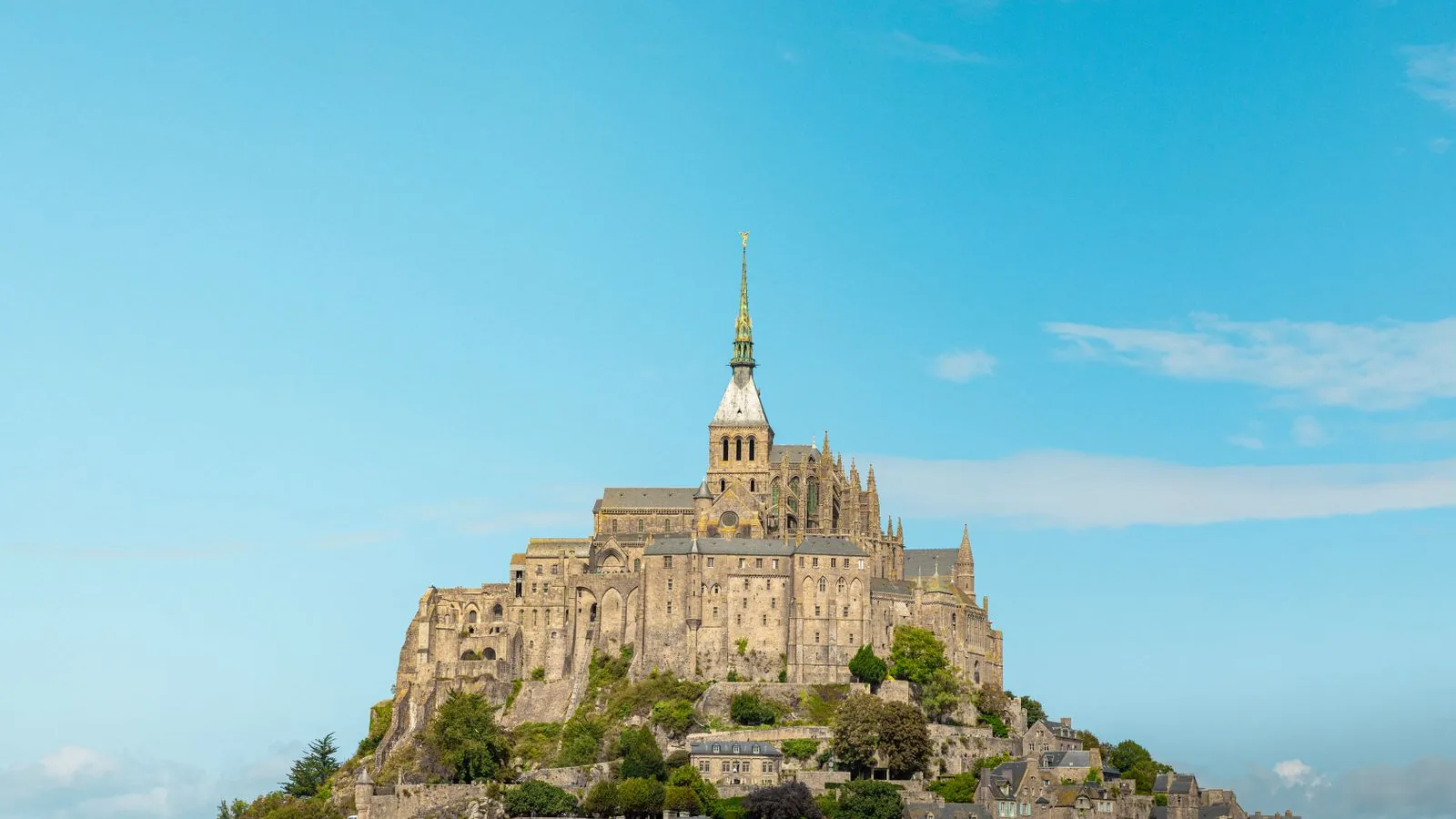
- Mont Saint-Michel area (restrictions around the island)
- Loire Valley châteaux gardens (ground-level only near monuments)
- French Alps mountain scenery
- Brittany coastal cliffs
- Bordeaux vineyards (outside harvest restrictions)
Apps and official maps
- Géoportail «Restrictions UAS catégorie ouverte» — the official DGAC and IGN restriction map. Note the ministry's own caveat: it is based on the arrêté and is complementary to knowing the rules, not a substitute for them
- AlphaTango — the DSAC portal for operator registration, aircraft registration and flight declarations
Practical tips
- The 800 g figure is about the aircraft, not about you. Any camera drone needs operator registration whatever it weighs
- At 800 g and above you also need an electronic signalling device — a French requirement with no EU equivalent, and one your home registration does not cover
- Paris is a prohibited area, not merely a restricted one. The two Bois are outside it but still need a declaration
- The urban rule changed on 1 January 2026, but only for professionals. Recreational flight over a built-up area is still prohibited
- French image law goes further than the GDPR: publishing or selling footage needs the consent of the people in it and of the owners of the places filmed
- The Géoportail map is an aid. The arrêté is the law, and the ministry says so on its own page
Questions about flying in France
Do I need to register to fly a drone in France?
Registration required — free. In the EU. One EU/EEA operator registration covers this country.
How high can I fly in France?
120 m above ground level in the Open category.
Do I need drone insurance in France?
There is no national insurance requirement for light drones in France. EU law only mandates third-party liability cover above 20 kg. Insurance is still strongly recommended, and it is required for most commercial work.
Can I fly a drone at night in France?
Night flying is allowed in the Open category. A drone with a class mark must show a flashing green light so it stays visible. You still have to keep it in sight, which is harder after dark, and national geographical zones apply exactly as they do in daylight.
What are the penalties for breaking drone rules in France?
The figures below come from the cited national legislation. Other breaches are handled administratively and the amount depends on the case.
Official sources
Primary sources used for this guide, checked September 2026. Open the live national source again before flying; geographical zones and temporary restrictions can change between reviews.
- National authority DGAC (Direction générale de l’aviation civile) — official drone information
- Registration AlphaTango
- Official zones and map Géoportail — Restrictions UAS catégorie ouverte — DGAC / IGN
- European framework Regulation (EU) 2019/947 — rules and procedures for operating unmanned aircraft
- Official maps directory EASA — national aviation authorities and geographical-zone sources
Rules change, and national authorities publish the current position. Before you fly, check DGAC (Direction générale de l’aviation civile) — it is linked at the top of this page too.