🇮🇹 Country guide · updated 2026-09
Drone laws in Italy
Italy is a demanding place to fly, and the reasons are rarely the ones visitors expect.
At a glance
- Registration
- €7/year subscription plus €7 per drone QR code (private individuals); €28 plus €112 per drone for companies
- Registration portal
- D-Flight
- Maximum height
- 120 m above ground level in the Open category.
- Insurance
- Required for all flights
Italy is a demanding place to fly, and the reasons are rarely the ones visitors expect. The airspace framework is ordinary EU material. What makes Italy different is that registration is a paid annual subscription rather than a one-off — the only EU country where that is true — that the portal wants an Italian tax code, that liability insurance is genuinely required rather than merely advisable, and that the country's monuments are protected by a body of heritage law that has nothing to do with aviation and issues its own permissions. A flight over Pompeii can be cleared in airspace terms and still be prohibited by the archaeological park. Plan for two systems, not one.
Country-specific decision path
Before you choose a launch point in Italy
- Confirm your operator paperwork Registration required — €7/year subscription plus €7 per drone QR code (private individuals); €28 plus €112 per drone for companies. In the EU. One EU/EEA operator registration covers this country. Open D-Flight
- Check the exact route on the official map d-flight is the national starting point; read every condition covering the complete route, not only the launch pin. Open d-flight
- Apply the local layer An EU or EEA operator registration is valid in Italy and does not need repeating — but the Italian aircraft-side duties still apply, and the d-flight account they require asks for an Italian tax code. Review the Italy zone and nature checks
Registration in Italy
Italy applies Regulations 2019/947 and 2019/945 through the UAS-IT Regulation, still Edition 1 of 4 January 2021 — a revision went out for consultation in December 2024 but was never adopted, so sources describing a newer edition are wrong. Geographical zones come from ENAC Circular ATM-09A of March 2021; a draft regulation that would replace it and raise several zone ceilings went to consultation in June 2026 and is not in force. What genuinely sets Italy apart is not the aviation framework but the two national layers on top of it: a paid registration platform, and a heritage-protection regime that governs images of cultural property independently of who cleared the flight.
Italy is the one EU country where registration is a recurring paid subscription rather than a one-off. d-flight prices rose on 15 January 2026: the Base subscription went from €6 to €7 and the Base QR code from €6 to €7. Companies must use the PRO tier (€28/year, €112 per QR code) — Base is for private individuals only. A free accreditation exists, but it only gives access to the geo-awareness maps, not registration.
What it costs: €7/year subscription plus €7 per drone QR code (private individuals); €28 plus €112 per drone for companies — Annual — the subscription must be renewed each year.
In the EU. One EU/EEA operator registration covers this country.
How to register
- Create an account on the d-flight portal at d-flight.it — this requires an Italian codice fiscale, which is the practical obstacle for visitors
- Take out a subscription: Base (€7/year) as a private individual, PRO (€28/year) if you are registering as a company
- Register as a UAS operator and receive your European operator identification code
- Buy a QR code for each drone (€7 Base, €112 PRO) and display it on the aircraft
- Arrange third-party liability insurance — ENAC requires it, including for sub-250 g drones with a camera
- Complete the A1/A3 online training and exam for your subcategory (ENAC's test is available in Italian only)
You register as an operator — not the drone. Registration is required from 250 g, or below 250 g if the drone can transfer more than 80 J of energy, or if it carries a sensor able to capture personal data. CE-marked toys are exempt. Put your operator number on every drone you fly and set it in Remote ID.
Flight rules
- Maximum height
- 120 m above ground level in the Open category.
- Line of sight
- Visual line of sight required for Open category. Italy permits BVLOS operations under Specific category with appropriate mitigations and authorizations.
- Weight classes
- Sub-250g drones have simplified requirements but privacy-capable devices still require operator registration. Weight categories follow EU C0-C4 classifications.
- Night flying
- Night flying is allowed in the Open category. A drone with a class mark must show a flashing green light so it stays visible. You still have to keep it in sight, which is harder after dark, and national geographical zones apply exactly as they do in daylight.
- Weather
- Good weather conditions required. Operators must assess wind, visibility, and precipitation before each flight. Minimum 5km visibility for most operations.
Class marks C0–C6 have been mandatory since 1 January 2024. The transition period is over: a drone without a class mark may only be flown in A1 (under 250 g) or A3 (under 25 kg).
Where you may not fly
There is no single EU-wide distance from airports. Each country publishes its own UAS geographical zones, so check the national map or app before every flight.
Airports and controlled airspace
Not a single radius. ENAC Circular ATM-09A divides the area around each airport into coloured zones referenced to the runway axis. At airports with instrument procedures the red zone reaches 6 km along both runway directions and 2.5 km to each side, and the Open category is prohibited inside it; orange runs to 10 km / 4 km and restricts flight above 25 m; yellow to 15 km / 8 km above 45 m. Airports without instrument procedures use half those figures, and heliports use concentric circles from the helipad reference point instead — red inside 1.5 km. Flight is allowed close to an artificial obstacle with the owner's permission: within 10 m laterally and 3 m above it in the red zone, 50 m and 5 m in the others.
Towns and cities
Italy applies the EU A1/A2/A3 distances directly rather than a national urban ban — the old ENAC «congested areas» concept disappeared when the pre-EU regulation was repealed. In practice a dense historic centre closes itself: A3 requires 150 m from residential, commercial and industrial areas, which is unachievable in central Florence or Venice, and A1 and A2 are limited by uninvolved people. ENAC also treats busy roads and railways as places where uninvolved persons will be present, and asks operators to stay away from them. Legitimate work in a city centre generally means the Specific category.
Protected nature
Law 394/1991 on protected areas prohibits unauthorised overflight of national parks, and permits come from each park authority rather than from ENAC. The parks set their own terms: Gran Paradiso bans drone overflight throughout, at any altitude, including for social media, and adds census windows when no exemption is granted at all; Cinque Terre requires the application at least 15 working days ahead with a €16 stamp duty; the Lombardy sector of Stelvio prohibits flight below 500 m and states plainly that recreational flights are never authorised. Note the mismatch that catches people out: ENAC can only enforce a restriction that appears on d-flight, but the park-law obligation stands whether or not the zone has been published there.
Government and military sites
Military sites, prisons and institutional buildings sit inside published prohibited areas. Vatican City is covered by prohibited area LI P243, which closes the airspace from the surface upward — so the ban is real, but it comes from Italian aviation law under Article 793 of the Navigation Code, not from a Vatican drone rule. Rome's institutional buildings have their own area, LI P244, and Etna and Stromboli are closed for volcanic activity.
Other restrictions in Italy
- Archaeological sites and UNESCO World Heritage locations typically prohibit drones
- Over the Colosseum, Roman Forum, and surrounding areas - strict no-fly zone
- Pompeii archaeological park - drones prohibited
- Near prisons and detention facilities
- Active port areas and shipping lanes
- Flying over Vatican City is prohibited.
Insurance
ENAC requires third-party liability cover for drone operations, and it applies further down than most people expect: a drone under 250 g still needs registration and insurance if it carries a camera or microphone, even though it needs no pilot certificate. ENAC does not publish a minimum sum insured.
Penalties
Penalties are set nationally and applied administratively. Serious or dangerous breaches — flying near aircraft, over crowds, or in a protected zone — can lead to prosecution. We do not publish figures for Italy because no official penalty schedule was available to verify. Check with ENAC (Ente Nazionale per l'Aviazione Civile) for the current position.
Whatever the amount, the pattern across Europe is the same: paperwork failures are handled administratively, while flying near aircraft, over crowds, or inside a protected zone is what turns a case into a prosecution.
Visiting Italy with a drone
An EU or EEA operator registration is valid in Italy and does not need repeating — but the Italian aircraft-side duties still apply, and the d-flight account they require asks for an Italian tax code. Non-EU visitors register in the first EASA state they fly in, which means d-flight if that is Italy, and a non-EU pilot certificate cannot be converted: you must sit the European exam, and ENAC's own version is in Italian only. Insurance is mandatory. Around monuments, remember that heritage permission and airspace permission are separate things.
Commercial work
Italy charges commercial operators more at every step. The PRO d-flight tier is mandatory for companies (€28/year, €112 per QR code), a Standard Scenario declaration costs €114, and an operational authorisation under Article 12 carries a €355 advance payment. Cross-border Specific-category operations need an application to ENAC at least 60 days ahead, with a €353 deposit — and ENAC warns explicitly that a d-flight number is not a substitute for operator registration under Article 14. Commercial filming over cultural property attracts a separate reproduction fee set by the Soprintendenza, and national parks charge again for professional work.
Location planning
These are well-known photographic subjects to research, not recommended launch points or proof that a flight is allowed. Check the exact route against official airspace, nature, land-manager and people restrictions.
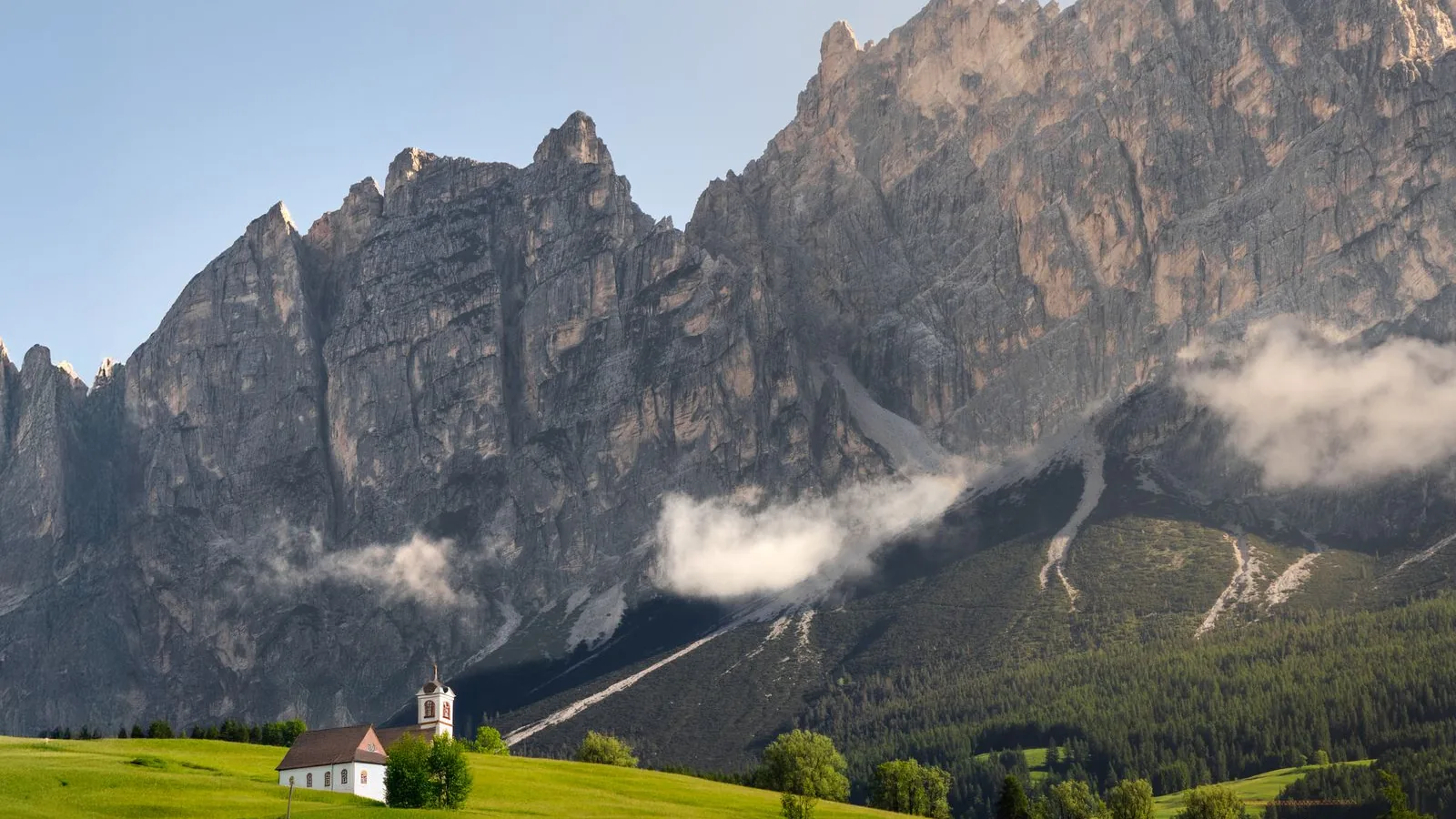
- Dolomites mountain ranges (check Parco Naturale restrictions)
- Tuscan countryside and vineyards
- Amalfi Coast cliffsides (many restrictions near towns)
- Lake Como shorelines (private property considerations)
- Sardinian beaches (seasonal restrictions)
- Sicilian coastal areas and Mount Etna region
Apps and official maps
- d-flight — the official Italian platform: registration, QR codes and the geographical-zone map. Free accreditation gives map access without a subscription
- AIP Italia (ENAV) — the source for prohibited areas; ENAC does not publish the list itself and points here
Practical tips
- Budget for the subscription. Italy is the EU country where registration keeps costing money — €7 a year plus €7 per drone, and four times that for a company
- The d-flight account needs an Italian codice fiscale, which is the real obstacle for visitors rather than the fee
- Insurance is required here, unlike most of the EU, and it applies to sub-250 g camera drones too
- Archaeological sites are a separate permission from the flight. Pompeii forbids drones without its own authorisation, quite apart from anything ENAC says
- A national park permit and an airspace clearance are different documents from different bodies — you may need both
- Check d-flight on the day: dozens of red zones around disused airfields were removed in April 2026, and the geographical-zone rules are themselves under revision
Questions about flying in Italy
Do I need to register to fly a drone in Italy?
Registration required — €7/year subscription plus €7 per drone QR code (private individuals); €28 plus €112 per drone for companies. In the EU. One EU/EEA operator registration covers this country.
How high can I fly in Italy?
120 m above ground level in the Open category.
Do I need drone insurance in Italy?
ENAC requires third-party liability cover for drone operations, and it applies further down than most people expect: a drone under 250 g still needs registration and insurance if it carries a camera or microphone, even though it needs no pilot certificate. ENAC does not publish a minimum sum insured.
Can I fly a drone at night in Italy?
Night flying is allowed in the Open category. A drone with a class mark must show a flashing green light so it stays visible. You still have to keep it in sight, which is harder after dark, and national geographical zones apply exactly as they do in daylight.
What are the penalties for breaking drone rules in Italy?
Penalties are set nationally and applied administratively. Serious or dangerous breaches — flying near aircraft, over crowds, or in a protected zone — can lead to prosecution. We do not publish figures for Italy because no official penalty schedule was available to verify. Check with ENAC (Ente Nazionale per l'Aviazione Civile) for the current position.
Official sources
Primary sources used for this guide, checked September 2026. Open the live national source again before flying; geographical zones and temporary restrictions can change between reviews.
- National authority ENAC (Ente Nazionale per l'Aviazione Civile) — official drone information
- Registration D-Flight
- Official zones and map d-flight — ENAC / d-flight
- European framework Regulation (EU) 2019/947 — rules and procedures for operating unmanned aircraft
- Official maps directory EASA — national aviation authorities and geographical-zone sources
Rules change, and national authorities publish the current position. Before you fly, check ENAC (Ente Nazionale per l'Aviazione Civile) — it is linked at the top of this page too.