🇪🇸 Country guide · updated 2026-09
Drone laws in Spain
Spain is the most-flown drone destination in Europe and one of the worst served by what is written about it.
At a glance
- Registration
- Free
- Registration portal
- AESA sede electrónica
- Maximum height
- 120 m above ground level in the Open category.
- Insurance
- Not required by national law
Spain is the most-flown drone destination in Europe and one of the worst served by what is written about it. The country replaced its entire national drone decree in June 2024, and a great deal of advice still in circulation — including the 8 km airport rule that appears in almost every English-language guide — describes rules that no longer exist. The current framework is in some ways more permissive than the old one: recreational and professional flying are treated alike, and there is a new allowance to fly up to 60 m in controlled airspace without coordination. In one way it is stricter, and it is the part visitors trip over: flying in a town, over a crowd, or over a serviced beach requires notifying the Ministry of the Interior five working days in advance.
Country-specific decision path
Before you choose a launch point in Spain
- Confirm your operator paperwork Registration required — free. In the EU. One EU/EEA operator registration covers this country. Open AESA sede electrónica
- Check the exact route on the official map ENAIRE Drones is the national starting point; read every condition covering the complete route, not only the launch pin. Open ENAIRE Drones
- Apply the local layer An EU or EEA operator registration is valid in Spain as it stands — do not register twice, and you cannot legally be registered in two states at once. Review the Spain zone and nature checks
Registration in Spain
Spain implements Regulations 2019/947 and 2019/945 through Royal Decree 517/2024, in force since 25 June 2024, which repealed the earlier national decree. Two things about it are worth knowing. First, most Spanish drone guidance still online describes the repealed regime — the 8 km airport rule is the clearest symptom. Second, the Supreme Court partly annulled the new decree in June 2025, striking out the section that would have created a Ministry of the Interior drone-and-sales register. The urban notification duty sits in a different chapter and survives. ENAIRE publishes the geographical zones and updates them on AIRAC cycles.
Registration is free, but it is no longer permanent. Royal Decree 517/2024 gave registrations a three-year life: those issued before 25 June 2024 run until 25 June 2027, and later ones expire three years from issue. Renewal is done by filing an amendment. Pages describing Spanish registration as a one-off with no expiry are describing the repealed regime.
What it costs: Free — Three years.
In the EU. One EU/EEA operator registration covers this country.
How to register
- Visit the AESA drone registration portal at sede.seguridadaerea.gob.es
- Create an account using your digital certificate or Cl@ve identification
- Complete the operator registration form with personal details
- Receive your unique EU operator registration number
- Mark your drone with the operator registration number
- Complete any required online training for your drone category
You register as an operator — not the drone. Registration is required from 250 g, or below 250 g if the drone can transfer more than 80 J of energy, or if it carries a sensor able to capture personal data. CE-marked toys are exempt. Put your operator number on every drone you fly and set it in Remote ID.
Flight rules
- Maximum height
- 120 m above ground level in the Open category.
- Line of sight
- Visual line of sight (VLOS) must be maintained at all times in Open category. Extended visual line of sight (EVLOS) requires additional authorization.
- Weight classes
- Drones under 250g have fewer restrictions but still require registration if equipped with cameras or sensors capable of capturing personal data. Drones over 25kg require Certified category operations.
- Night flying
- Night flying is allowed in the Open category. A drone with a class mark must show a flashing green light so it stays visible. You still have to keep it in sight, which is harder after dark, and national geographical zones apply exactly as they do in daylight.
- Weather
- Flights should only occur in weather conditions suitable for safe operation. Minimum visibility of 5km required for most operations.
Class marks C0–C6 have been mandatory since 1 January 2024. The transition period is over: a drone without a class mark may only be flown in A1 (under 250 g) or A3 (under 25 kg).
Where you may not fly
There is no single EU-wide distance from airports. Each country publishes its own UAS geographical zones, so check the national map or app before every flight.
Airports and controlled airspace
The 8 km rule that circulates everywhere was real, and it is gone. It came from Royal Decree 1036/2017, which was repealed by Royal Decree 517/2024 in June 2024. What replaced it is geometry, not a radius: around a public-use civil or military aerodrome the zone runs 6 km from the runway ends along the axis and 5 km to each side below 45 m, widening to 10 km and 7.5 km between 45 m and 900 m. Heliports use smaller rectangles. Inside those volumes UAS flight is prohibited unless you have agreed a procedure with the aerodrome manager. Controlled airspace elsewhere gained a genuinely useful exception in 2024: visual flight up to 60 m above ground is allowed outside aerodrome zones with no ATS coordination and no flight plan.
Towns and cities
Spain has no blanket urban ban, but it does have a duty that visitors routinely miss. Article 40 of Royal Decree 517/2024 makes urban environments a geographical zone in their own right, extending 300 m above the highest obstacle within 600 m of the aircraft — and a registered operator must notify the Ministry of the Interior at least five working days before flying there or over a gathering of people. One notification can cover several flights inside a five-day window. Overflying buildings and dwellings needs the owner's or administrator's permission, courtyards included, and the A1/A2/A3 distances apply on top.
Protected nature
The binding rule is environmental, not aeronautical. Law 30/2014 prohibits overflight of national parks below 3,000 m without express authorisation, and Royal Decree 493/2021 replaced that with a flight level for each of fourteen parks. Since Open-category drones are capped at 120 m, every drone flight over those parks sits under the legal floor and needs authorisation — from the protected area's manager, not from AESA. Teide is the clearest case: drone overflight inside the national park is prohibited as a general rule, and the Cabildo of Tenerife grants exceptions only for management, research or emergencies, with at least a month's notice and outside the nesting season. The Balearics require authorisation in Natura 2000 sites for any purpose, with published day rates.
Government and military sites
Military installations, prisons, ports and government buildings are closed. Spain also runs a separate regime that surprises people, the restricted photographic flight zones: these prohibit capturing images from the air rather than the flight itself, they are listed in the AIP by map sheet, and permission comes from the Air Force's cartographic centre.
Other restrictions in Spain
- Beaches during summer season (June-September) often have local prohibitions
- Major events and festivals without specific authorization
- Areas with temporary flight restrictions (TFRs) published via NOTAM
- Beach restrictions are set by individual municipalities, not nationally — check the local council before flying over a beach.
Insurance
AESA's own pages disagree, so treat this with care. The announcement of the 2024 decree said the insurance obligation was abolished for Open-category A1 and for A3 under 20 kg, leaving EU Regulation 785/2004 to cover 20 kg and above; but AESA's consumer-facing pages state that civil liability cover is required. We have not been able to reconcile the two against the decree text. Insurance is inexpensive and required for most commercial work in any case — the safe course is to carry it.
Penalties
The figures below come from the cited national legislation. Other breaches are handled administratively and the amount depends on the case.
| Breach | Penalty | Source |
|---|---|---|
| Minor infringements (leve) | €60 to €45,000 | Ley 21/2003 de Seguridad Aérea. Administrative. |
| Very serious infringements (muy grave) | Up to €225,000 | Ley 21/2003. Administrative — the highest band, not a criminal sentence. |
Whatever the amount, the pattern across Europe is the same: paperwork failures are handled administratively, while flying near aircraft, over crowds, or inside a protected zone is what turns a case into a prosecution.
Visiting Spain with a drone
An EU or EEA operator registration is valid in Spain as it stands — do not register twice, and you cannot legally be registered in two states at once. A non-EU visitor registers with AESA only if Spain is the first EU state they will fly in, and will need the e4F electronic signature system to file anything with AESA. Registration itself is free. The single practical trap is the urban regime: a Spanish town, and any publicly accessible beach with facilities on it, is a geographical zone requiring five working days' notice to the Ministry of the Interior. That has nothing to do with being a foreigner, and everyone misses it.
Commercial work
The most useful thing to know is that the distinction has been abolished. Royal Decree 517/2024 put recreational and professional flying on the same footing: the old separate professional regime — safety studies, ten-day notifications, impact-energy limiters — is gone. What decides your obligations now is risk, not payment. Open-category limits apply to paid work exactly as they do to a holiday video, and anything beyond them means the Specific category, reached through an STS declaration, an operational authorisation, or a LUC. Direct Remote Identification has been mandatory for Specific-category operations since January 2024.
Location planning
These are well-known photographic subjects to research, not recommended launch points or proof that a flight is allowed. Check the exact route against official airspace, nature, land-manager and people restrictions.
- Costa Brava cliffs and beaches (check local restrictions)
- Canary Islands volcanic landscapes
- Pyrenees mountain ranges
- Andalusian white villages (pueblos blancos)
- Basque Country coastline
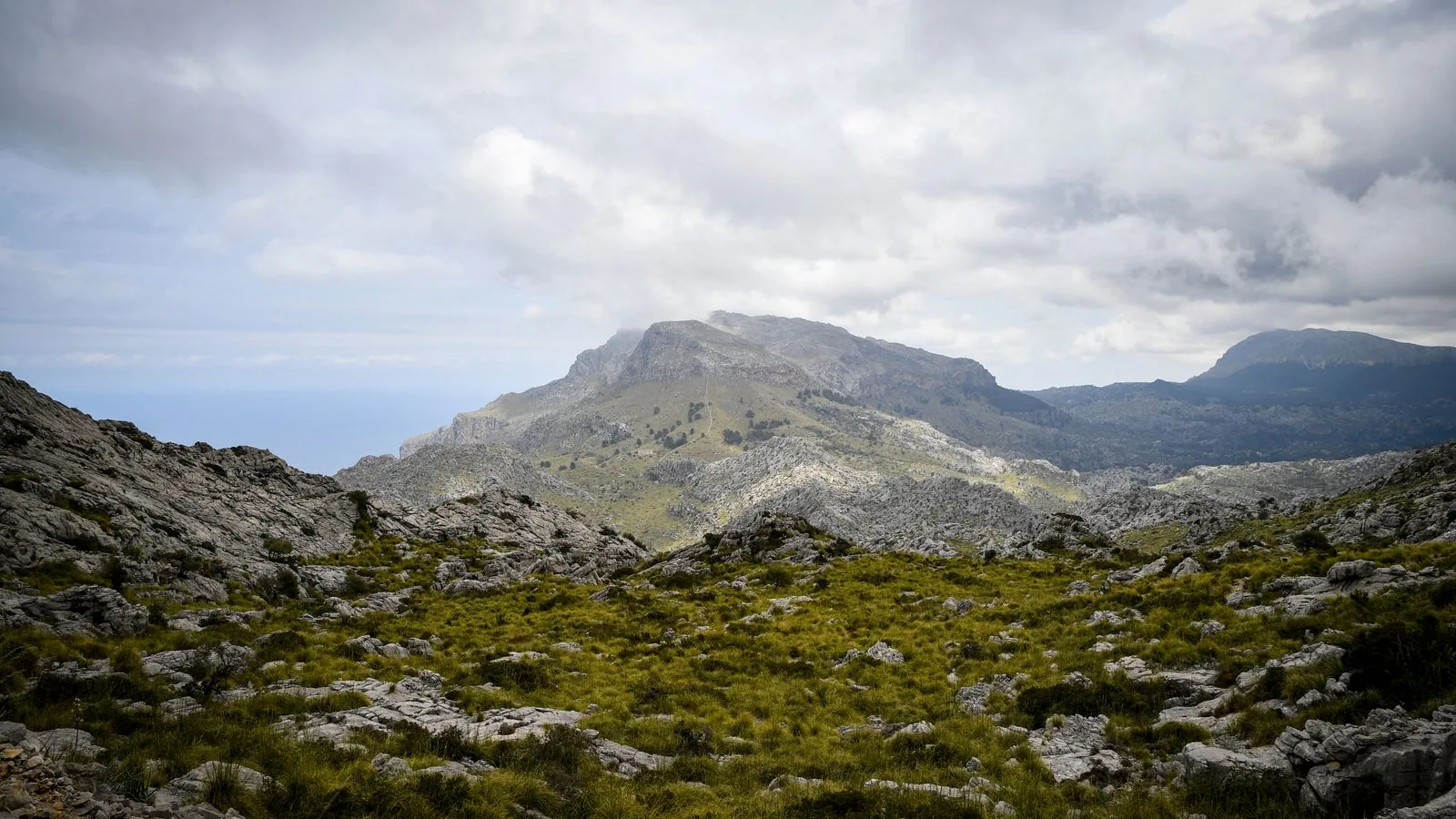
- Mallorca's Serra de Tramuntana
Apps and official maps
- ENAIRE Drones - official Spanish airspace app
- Planea - flight planning and authorization requests
- AIP Spain - aeronautical information
Practical tips
- Forget the 8 km airport rule — it was repealed in 2024. Read the actual zone on ENAIRE Drones instead
- If you plan to fly in a town, over a serviced beach or near a crowd, the Interior Ministry notification is due five working days ahead
- Your registration now expires. Anything issued before 25 June 2024 lapses on 25 June 2027
- A busy beach with facilities counts as an urban environment year-round, which is the real reason summer beach flying goes wrong — not a seasonal ban
- National parks are decided by the park authority, not AESA, and Teide is prohibited as a general rule
- ENAIRE's own map warns that it does not cover military areas, private ATS providers, protected natural spaces or Interior Ministry requirements. It is the airspace picture, not a clearance
Questions about flying in Spain
Do I need to register to fly a drone in Spain?
Registration required — free. In the EU. One EU/EEA operator registration covers this country.
How high can I fly in Spain?
120 m above ground level in the Open category.
Do I need drone insurance in Spain?
AESA's own pages disagree, so treat this with care. The announcement of the 2024 decree said the insurance obligation was abolished for Open-category A1 and for A3 under 20 kg, leaving EU Regulation 785/2004 to cover 20 kg and above; but AESA's consumer-facing pages state that civil liability cover is required. We have not been able to reconcile the two against the decree text. Insurance is inexpensive and required for most commercial work in any case — the safe course is to carry it.
Can I fly a drone at night in Spain?
Night flying is allowed in the Open category. A drone with a class mark must show a flashing green light so it stays visible. You still have to keep it in sight, which is harder after dark, and national geographical zones apply exactly as they do in daylight.
What are the penalties for breaking drone rules in Spain?
The figures below come from the cited national legislation. Other breaches are handled administratively and the amount depends on the case.
Official sources
Primary sources used for this guide, checked September 2026. Open the live national source again before flying; geographical zones and temporary restrictions can change between reviews.
- National authority AESA (Agencia Estatal de Seguridad Aérea) — official drone information
- Registration AESA sede electrónica
- Official zones and map ENAIRE Drones — ENAIRE
- European framework Regulation (EU) 2019/947 — rules and procedures for operating unmanned aircraft
- Official maps directory EASA — national aviation authorities and geographical-zone sources
Rules change, and national authorities publish the current position. Before you fly, check AESA (Agencia Estatal de Seguridad Aérea) — it is linked at the top of this page too.